
Last updated November 21, 2026
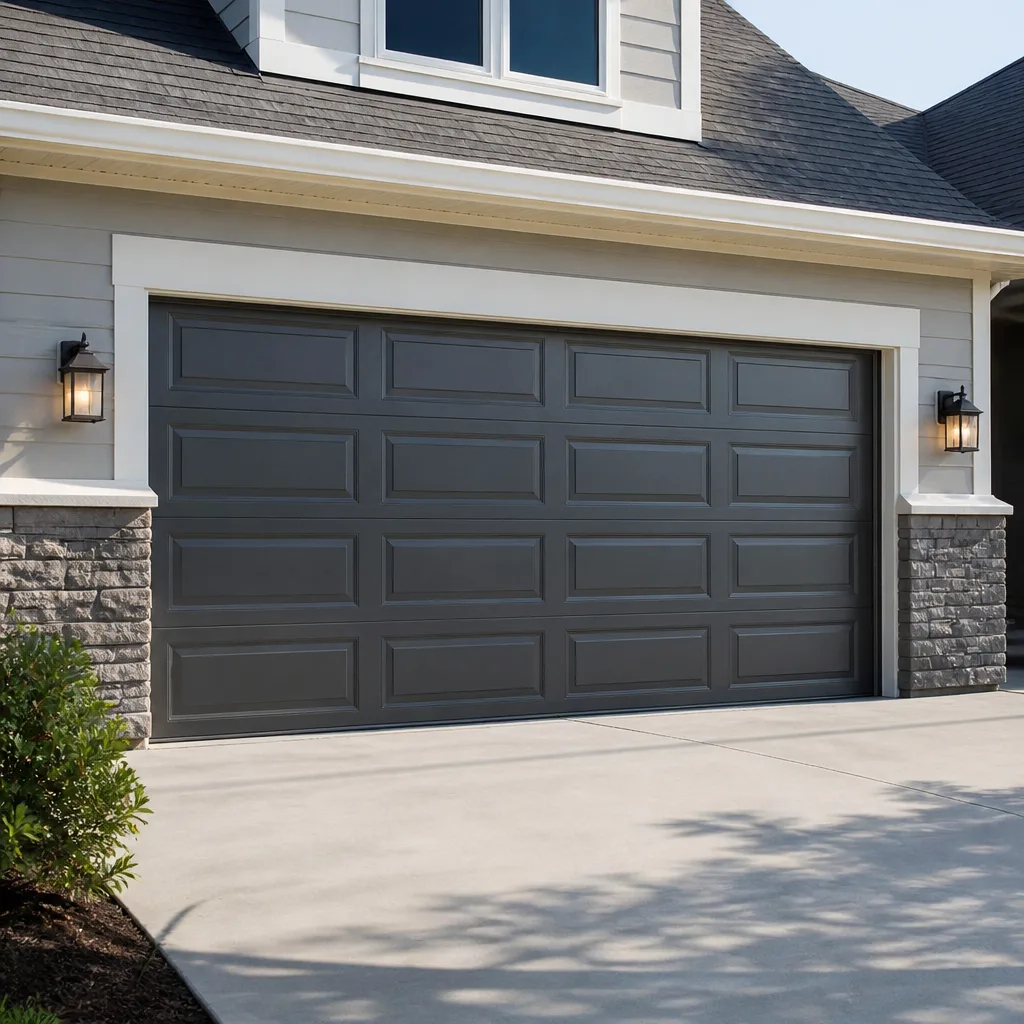 Raised-panel steel
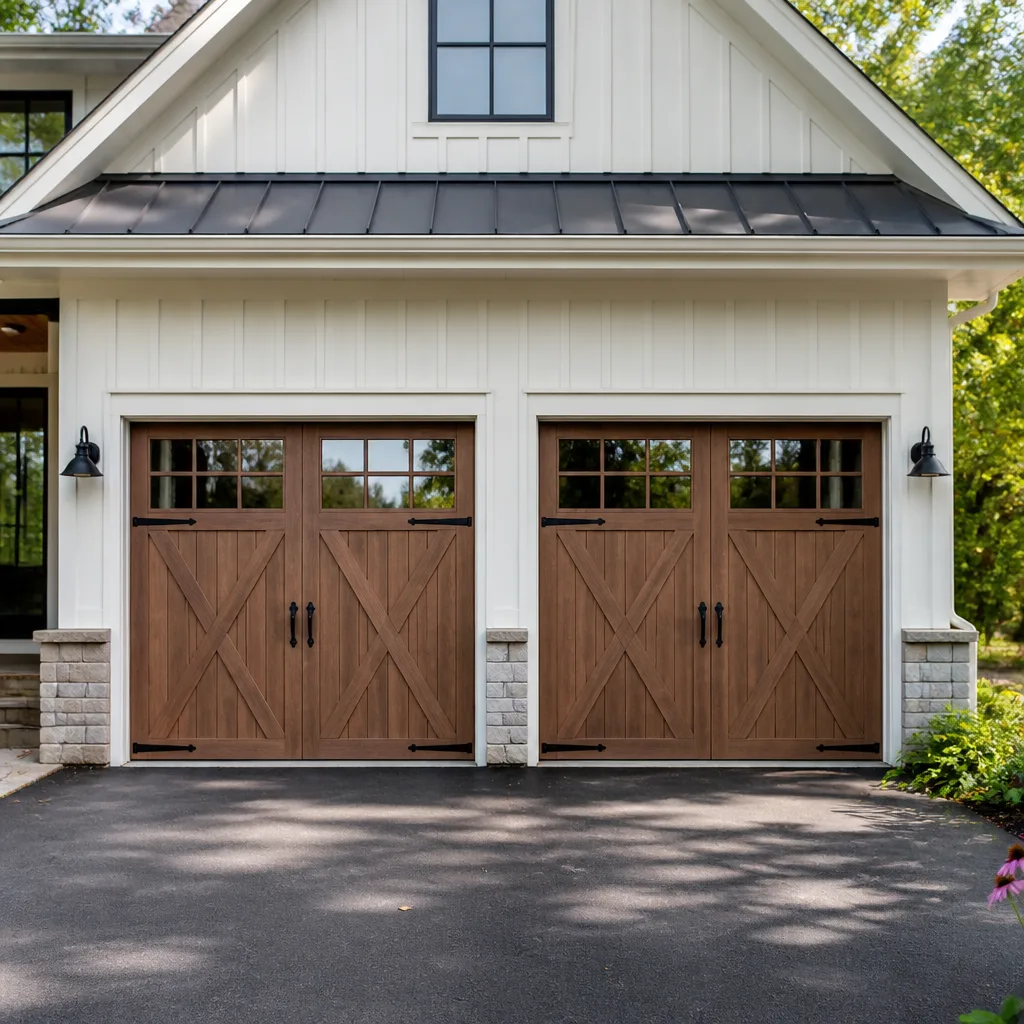 Carriage house
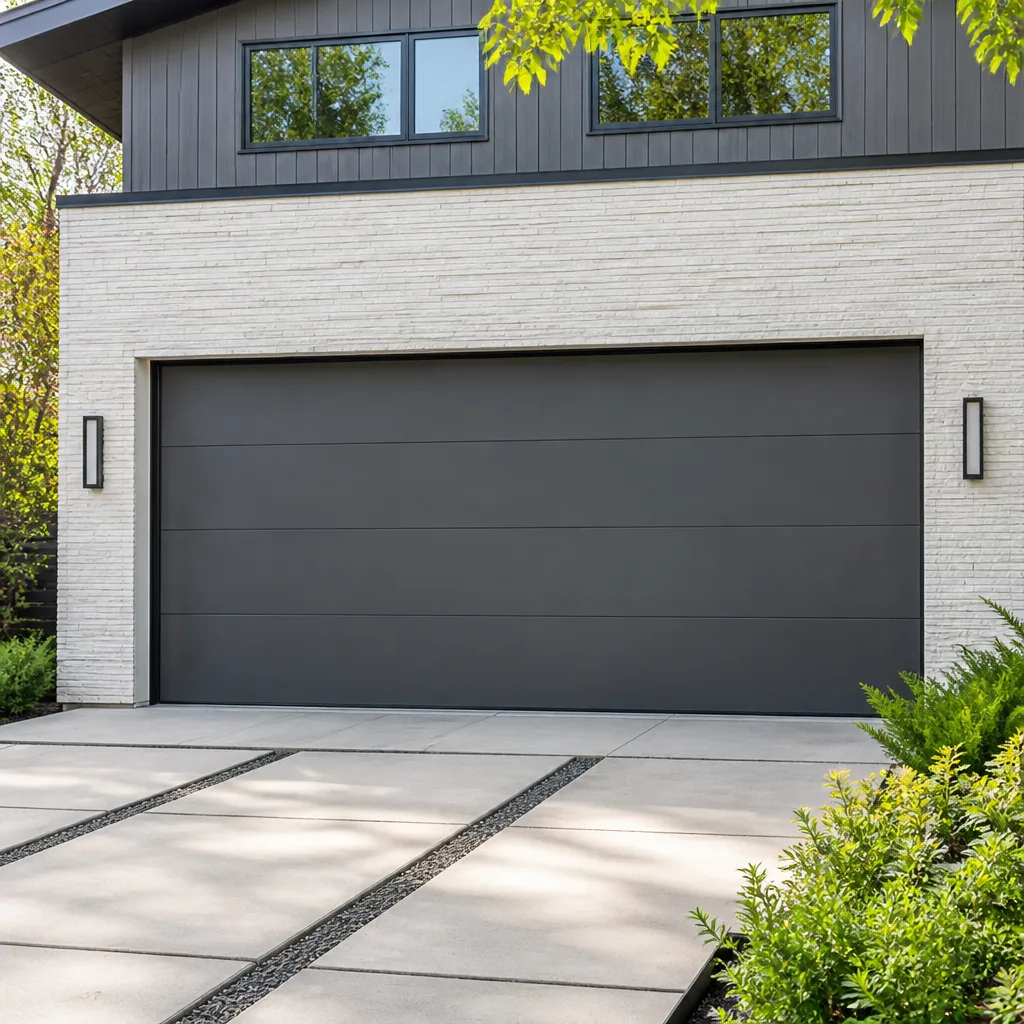 Modern flush
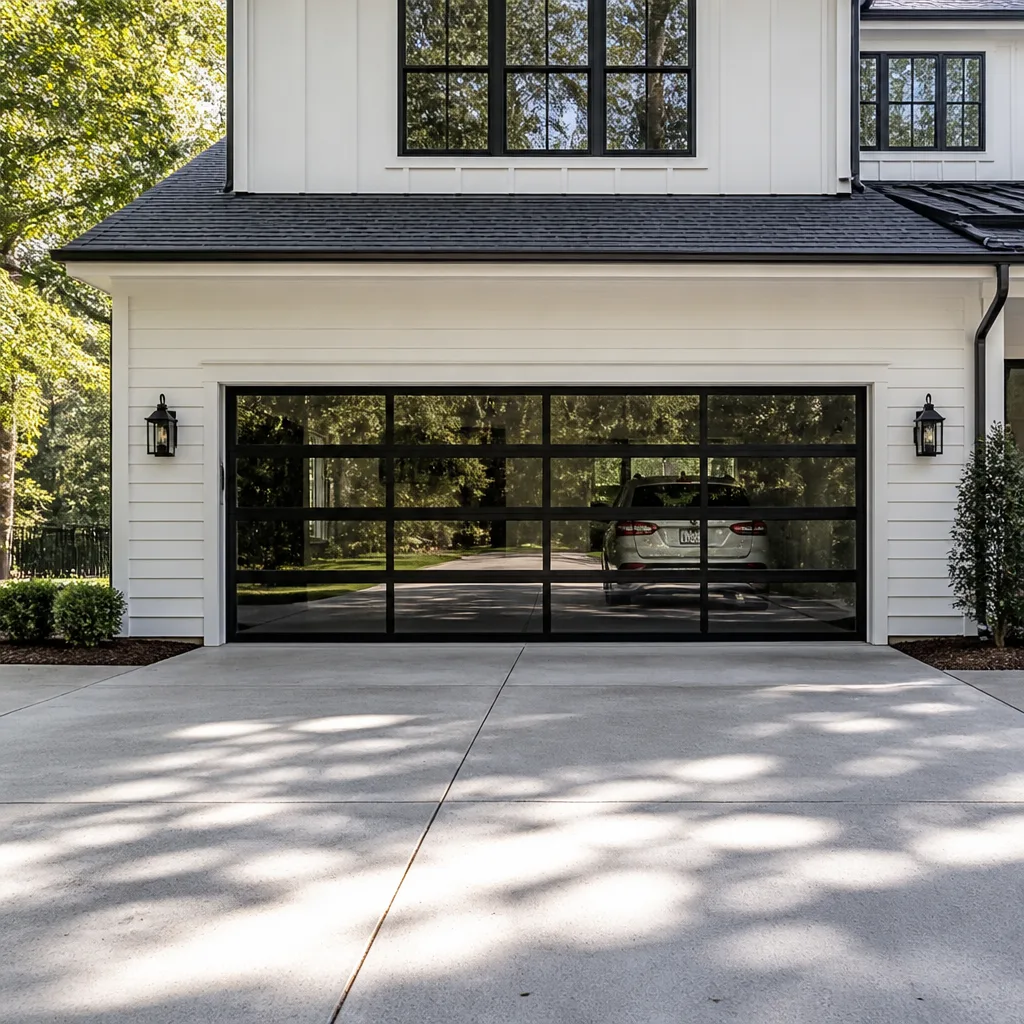 Full-view glass
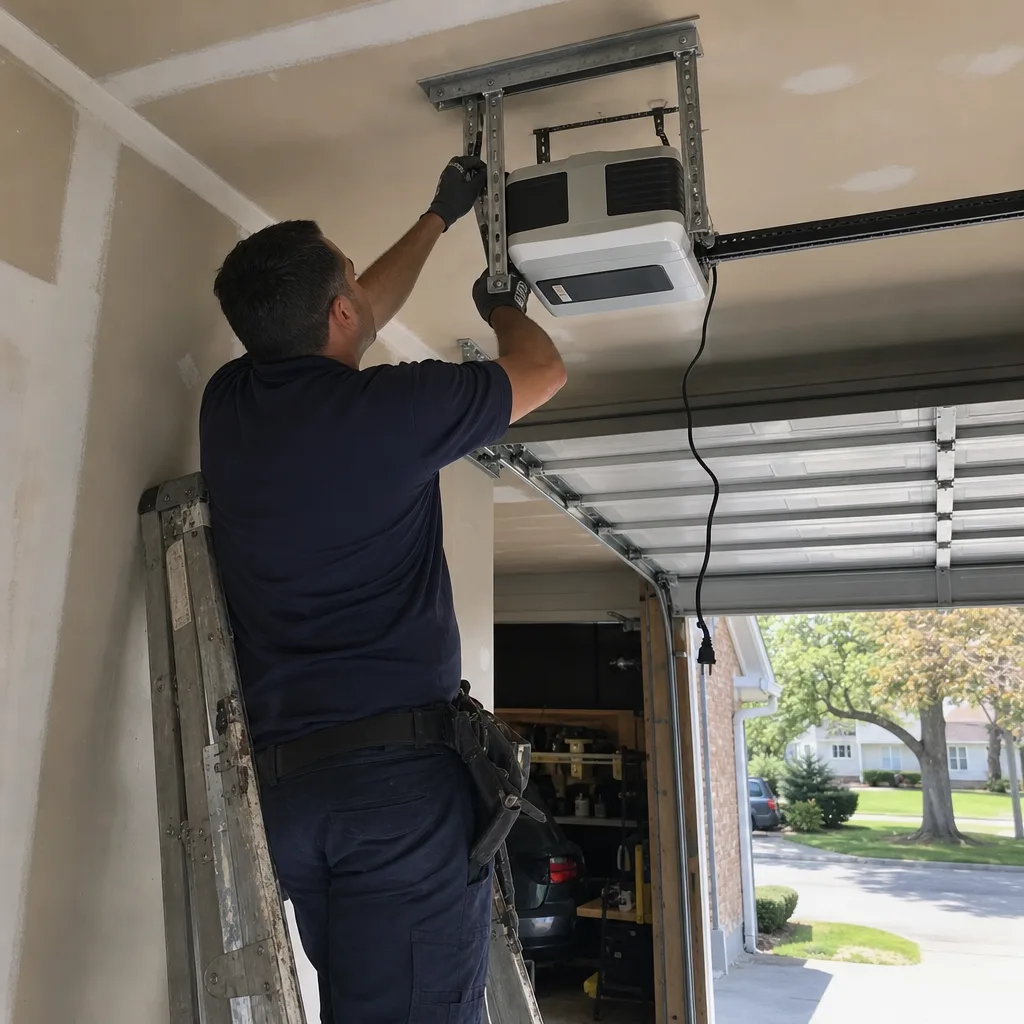
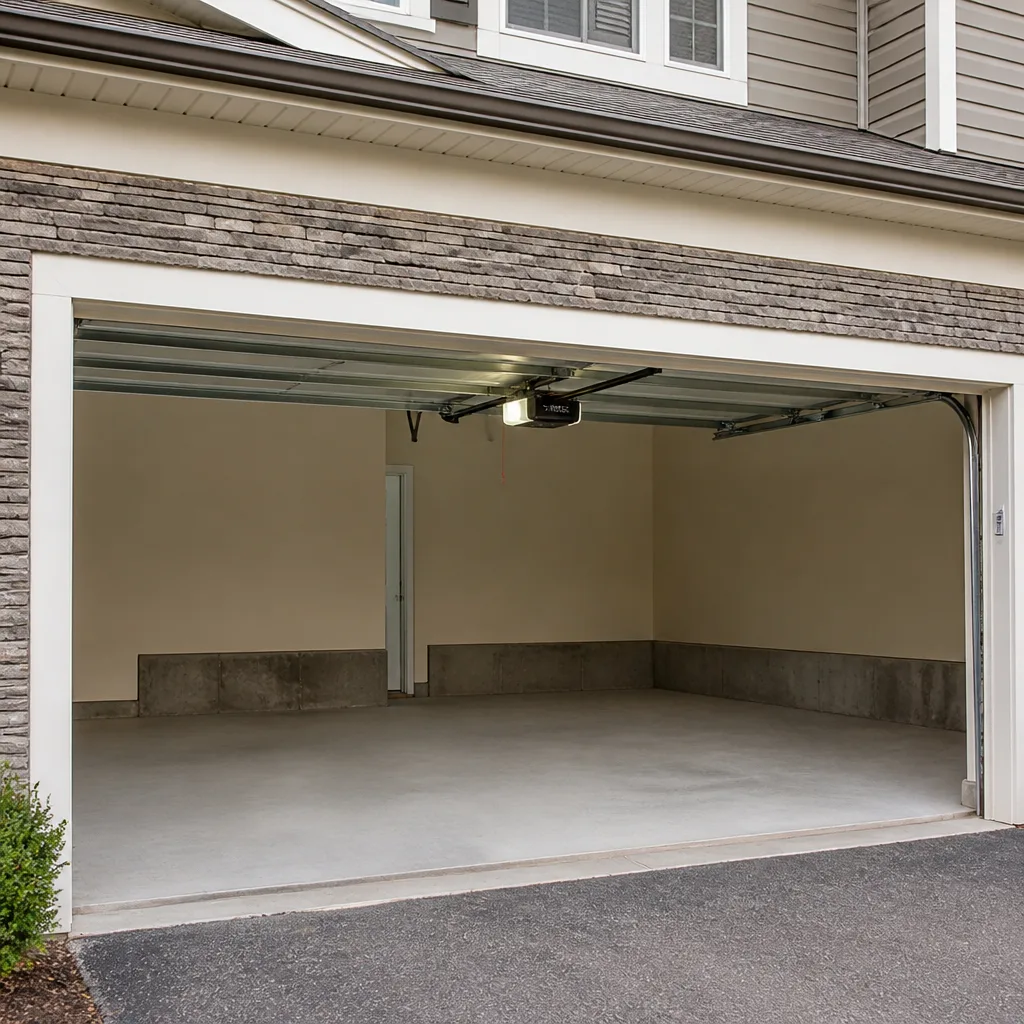 LiftMaster openers
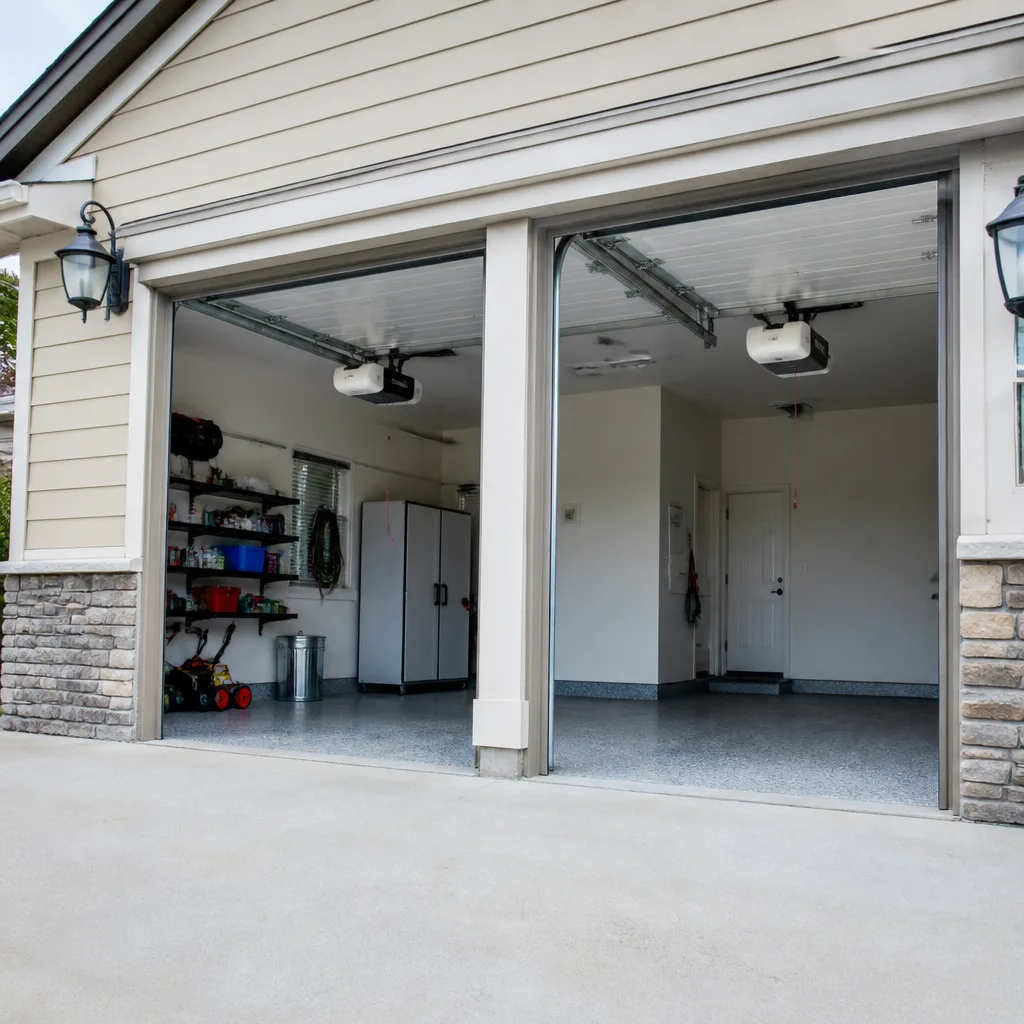 Chamberlain openers
Full 25-point door and opener safety check with every visit - springs, cables, rollers, tracks, and your LiftMaster or Chamberlain opener included
You get a price before we start. It does not change when the pro arrives.
Get your free estimateThe Complete Guide to Garage Doors in Elmhurst
Most garage door guides assume a two-car suburban driveway. In Elmhurst, where a 10-foot clearance and a shared wall are the norm, the wrong door width or spring tension spec can mean the door physically won’t function – a mistake that costs hundreds to undo. The housing stock here was built tight: attached rowhouses, semi-detached brick buildings, narrow shared driveways, and garages that were an afterthought to the lot line. Generic advice about “standard” doors and “standard” openers doesn’t map onto that reality. This guide covers what Elmhurst homeowners actually deal with – low headroom, side-room pinch points, humidity and temperature swings that punish cables and springs, and how to decide whether to repair, replace, or overhaul a system that’s already on its last leg.
Quick Answer
Garage doors in Elmhurst usually fall into repair territory when a single component fails (spring, cable, opener gear, roller), and into replacement territory when the door shell or track is warped, rusted through, or dimensionally wrong for the opening. The three factors that drive every decision are door age, opener type, and spring condition. Most Elmhurst jobs come down to torsion spring replacement, opener drive repair, or a full door-and-opener installation sized to a 8×7 or 9×7 single-car opening.
Styles & brands we work with
- Raised-panel steel
- Carriage house
- Modern flush
- Full-view glass
- LiftMaster openers
- Chamberlain openers
Table of Contents
- How Elmhurst’s Housing Stock Shapes Garage Door Problems
- Headroom and Side-Room: Why Clearance Decides Your Door Type
- The Anatomy of a Garage Door: Real Parts and What Fails First
- Torsion Springs, Extension Springs, and Why They Fail
- Sizing a Door for an Elmhurst Opening: 8×7, 9×7, and What Fits
- Openers: Legacy vs. Smart, and the Wiring Question
- Repair, Replace, or Full System Overhaul: A Decision Tree
- How Queens Humidity and Temperature Swings Wear Out Hardware
How Elmhurst’s Housing Stock Shapes Garage Door Problems
Elmhurst is not a suburb of detached houses with generous setbacks. It’s a dense Queens neighborhood where buildings were constructed to squeeze maximum square footage onto narrow lots. That shows up in garage doors in three specific ways.
First, attached and semi-attached construction. In rowhouse blocks, garages often share one or both walls with a neighbor’s building. There’s no room to frame a wider opening, and the door has to fit a structural opening that was cut before modern door standards existed. A 9×7 door won’t magically fit a 8×7 rough opening. Neither will a standard low-headroom track fit a garage that actually has reduced ceiling clearance unless you measure first.
Second, narrow shared driveways. Many Elmhurst driveways are only as wide as a single vehicle with a few feet to spare. That limits how far a door can be removed, how much space a crew has to maneuver a new door panel in, and whether a side-mount opener is the smarter choice than a ceiling-mount unit that needs the center of the ceiling clear.
Third, aging electrical and framing. Garages built decades ago frequently have a single unswitched outlet, wiring that runs to a utility room, or a ceiling joist layout that doesn’t match a modern opener’s mounting brackets. Upgrading to a LiftMaster or Chamberlain unit on a smart-home system may require an outlet in a specific spot, which can mean an electrician visit before our technicians arrive.
You can see the mechanics of all of that on our Elmhurst Garage Door Repair Pros page, and it’s the practical reason we ask about building type before we quote.
Headroom and Side-Room: Why Clearance Decides Your Door Type
Two measurements control almost everything in a garage door installation: headroom and side-room. Headroom is the vertical distance from the top of the door opening to the ceiling. Side-room is the horizontal distance from the edge of the door opening to the nearest wall or obstruction. Standard sectional doors need roughly 12 inches of headroom and a few inches of side-room for the track. Torsion spring systems need more side-room than extension spring systems.
In Elmhurst, reduced headroom is common. Older garages often have ceiling heights that sit just below the track’s minimum, or a furnace duct, plumbing chase, or structural beam running across the spot where the horizontal track would mount. That’s why the same door size can be perfectly installable in one Elmhurst garage and impossible in the one next door.
Which is where the wrong assumption gets expensive. A homeowner measures the doorway width, orders a door, and discovers the door can’t be installed because the track won’t clear the joist. A common fix is a low-headroom track configuration, which uses a tighter radius on the curve of the track and reorients the spring assembly. A second option, when headroom is fine but ceiling space is compromised, is a side-mount opener (often called a jackshaft opener) that mounts to the wall near the torsion bar instead of hanging from the ceiling. That leaves the center of the ceiling free for storage or for that duct.
Before anything is ordered for an Elmhurst install, we measure:
- Door opening width and height (both are needed; nominal sizes lie)
- Headroom from top of opening to ceiling, including any obstructions
- Side-room on both sides, accounting for adjacent walls and the torsion bar location
- Depth of the garage, to confirm the horizontal track won’t hit a rear wall or stair
- Whether the ceiling can carry the weight of a ceiling-mount opener and its rail
Getting these right is the difference between a door that cycles smoothly and one that scrapes the track from day one. Our garage door installation process starts with these measurements, not with a product catalog.
The Anatomy of a Garage Door: Real Parts and What Fails First
A sectional garage door is a small mechanical system. When a door stops working, one of these components is almost always the cause. Understanding what each one does makes the diagnosis – and the repair quote – make sense.
Torsion springs are the heavy coiled springs mounted on a horizontal bar above the door. They store the energy that counterbalances the door’s weight. A door that feels like it weighs 200 pounds actually weighs closer to 15 when the torsion springs are healthy. Most single-car doors use one or two torsion springs.
Extension springs run along the horizontal tracks on each side, stretching as the door closes. They’re common on older and lighter doors. Extension springs are cheaper to replace but fail more abruptly and, in some configurations, less safely.
Cable drums sit on each end of the torsion bar. The cables wrap around the drums, and the drums control how the spring torque is transferred to the door. A worn or slipped cable drum lets the door drift, hang crooked, or drop on one side.
Lift cables connect the bottom corner brackets of the door to the drums. They’re under tension at all times and are the part that most often snaps when the door is left in a partially open position for long periods.
The trolley carriage is the piece that rides along the opener rail and connects the door arm to the opener. When a door opens a few inches and stalls, or the opener runs but the door doesn’t move, a broken carriage or a stripped gear inside the opener is usually the answer.
In our experience across Elmhurst single-car garages, the order of failure runs roughly like this:
- Torsion spring fatigue or break (most common, and it typically fails without warning)
- Opener gear wear inside the drive housing (a clicking opener is the tell)
- Cable fray or drum slip, usually caused by a door left partway open
- Roller wear and hinge fatigue, which show up as a noisy door and a wobbly ride
- Panel rust and bottom seal failure, which lets water and mice into the garage
Once you know which of these is the actual problem, the repair path is usually straightforward. That’s the basis of our garage door repair work.
Torsion Springs, Extension Springs, and Why They Fail
Springs are the most common garage door repair in Elmhurst, and the most dangerous to handle without proper tools. A torsion spring is under enough stored torque that a slipped winding bar can cause serious injury. A snapped extension spring can whip across the garage. This is not a component to diagnose by feel or to replace on a ladder.
Springs fail for four reasons, and Elmhurst’s climate hits two of them hard:
- Cycle counts. A spring has a rated cycle life. Every open and close counts as one cycle. A car used twice a day, five days a week, gets through thousands of cycles over a few years – and torsion springs eventually hit the end of their rating.
- Temperature swings. Queens winters drop into the 20s with regularity, and summers push into the 90s with high humidity. The metal expands and contracts with those swings, which accelerates fatigue at the tightest coil points.
- Improper tension. A door installed with slightly too much or too little torsion preload will stress the spring unevenly and shorten its life. That’s often a symptom of a door that was sized by guesswork.
- Lack of lubrication. Torsion springs and the torsion bar benefit from periodic lubrication. Dry, rusty springs wear faster and can make the winding process harder to service later.
The telltale signs that a spring is near failure: a loud bang from the garage (a torsion spring breaking sounds like a gunshot), a door that feels unusually heavy when lifted by hand, a gap between coils on one side of the torsion spring, or a door that hangs crooked after opening. If any of those show up, stop operating the door and call.
We treat spring work as its own discipline: trained technicians, the right winding bars and C-clamps, and no shortcuts on the safety protocol. Because when a torsion spring lets go, the door becomes a several-hundred-pound dead weight hanging over the car and anyone standing under it. Our garage door opener repair work handles the opener side of the system the same way – component by component, not by swapping the whole unit to save diagnostic time.
Sizing a Door for an Elmhurst Opening: 8×7, 9×7, and What Fits
The two most common single-car garage door sizes in Elmhurst are 8×7 and 9×7. Nominal sizing is only a starting point. The rough opening you measure in an older Elmhurst garage can be off by an inch or two from the “standard” dimension, and a door panel that’s a fraction too wide won’t drop into place.
Sizing questions come up most often with brand swaps. If a homeowner replaces an original door with a Clopay, Amarr, or Wayne Dalton unit, the panel construction and track dimensions have to match the actual opening and headroom. Those three brands are common in Elmhurst single-car garages, and each offers low-headroom and standard configurations that fit the neighborhoods here. A door that fits a standard 9×7 opening in a purpose-built install may need a low-headroom track or a trimmed panel for a narrow Elmhurst garage.
Here’s the sequence we use before ordering:
- Measure the rough opening at top, middle, and bottom. If the three numbers don’t match, the framing isn’t square and the door spec has to account for it.
- Measure headroom and side-room, then subtract for any ductwork, wiring, or structural obstructions.
- Confirm the track configuration: standard radius, low-headroom, or high-lift, based on the clearance math.
- Match the door panel series to the opening dimensions and required R-value, not just to the size label.
- Confirm opener compatibility. A side-mount opener changes the door’s spring and track requirements even when the panel size is unchanged.
Every one of those steps has a real cost impact. Oversized or undersized disassembly is a full reinstall. Getting it right on the first measure is what keeps an Elmhurst install from becoming a return visit.
Openers: Legacy vs. Smart, and the Wiring Question
An opener can outlive two doors or fail inside three years. The brand on your wall matters more than most homeowners expect – a LiftMaster or Chamberlain unit behaves differently under repair than a Genie, Craftsman, or Raynor, and knowing the drive system going in saves diagnostic time. LiftMaster and Chamberlain are the two dominant smart-home brands, and their myQ connected systems behave differently from a plain legacy opener when the problem is a Wi-Fi pairing issue rather than a mechanical one.
Elmhurst’s aging housing stock raises a specific wiring question that generic guides skip. A modern opener – especially a smart one – needs an outlet near the unit, and belt-drive openers with integrated battery backup need dedicated power. In an older Elmhurst garage, that outlet might be on the far wall, might be unswitched, and might be on a circuit shared with a laundry room. Whether a LiftMaster upgrade needs an electrician depends on those details. We can diagnose the mechanical side of any opener repair, but if the wiring isn’t in place for a smart unit, an electrician needs to do that part before we can install.
Opener problems split into two categories that behave differently:
- Mechanical: stripped gears, worn trolley carriage, broken drive belt or chain, failing limit switches. These are repair jobs, usually finished the same day once diagnosed.
- Electrical or connectivity: dead outlets, bad wall controls, lost Wi-Fi pairing, dead backup batteries. Some of these resolve on the opener side, some on the home’s wiring side.
If your opener clicks but the door doesn’t move, or the door stalls partway up, don’t assume the door is the problem. It’s most often the opener drive or the carriage, and either way it’s a repair call, not a replacement.
Repair, Replace, or Full System Overhaul: A Decision Tree
The right answer comes down to three inputs: door age and condition, opener type and condition, and spring condition. Here’s how we walk through it.
Start with the door shell. Run a hand down each panel. If the steel is warped, creased, or rusted through at the bottom, replacement is the only repair that lasts. If the panels are sound and the paint is holding, you’re likely in repair territory. Serious dents that flex a panel need replacement of that panel, not straightening.
Then the opener. A modern LiftMaster or Chamberlain opener with a working drive system can usually be repaired. An older legacy unit with a stripped gear and aging electronics may not be worth the parts cost, though we still repair them when that’s the right call – a Craftsman chain-drive that just needs a carriage is a repair, not a replacement.
Then the springs. A single snapped torsion spring on an otherwise healthy door is a repair, usually same-day once the correct spring is confirmed. If both torsion springs are original to a door that’s already had two panel replacements, the springs may be the last original part, and replacing them is still the right move.
The full overhaul case. When a door is more than fifteen years old, the panels are rusted, the opener is original, and one spring is already gone, the cost of repairing everything separately can approach the cost of a new door-and-opener installation. That’s the honest comparison every homeowner should be shown, with numbers, so they can choose.
Here’s the same logic as a short list of triggers:
- Repair – one failed component, sound shell, functioning opener, springs otherwise healthy
- Panel or door replacement – warped, creased, or rusted panels, but functional opener and springs
- Opener replacement only – failing drive system with a sound door and springs
- Full system overhaul – old shell, old opener, compromised springs; the math stops favoring piecemeal repairs
Either direction is available through one company. That’s deliberate – the homeowner never has to hand off a half-finished system to a second installer.
How Queens Humidity and Temperature Swings Wear Out Hardware
Elmhurst sits in the Queens climate zone: humid summers, cold winters with regular freezes, and a lot of freeze-thaw cycling through the colder months. Every garage door component responds to that cycle in a specific way.
Steel panels rust at the bottom where the seal holds water. Winter road salt gets tracked onto the door by cars, and the bottom panels take the worst of it. Summer humidity accelerates surface rust anywhere the paint has nicked. A well-painted door with an intact bottom seal handles this fine; a door with a torn seal and chipped paint at the bottom edge starts rusting from the inside out.
Cables and springs see temperature-driven fatigue. Torsion springs wound tight in the summer rarely fail from heat. What breaks them is the repeated expansion and contraction through the freeze-thaw cycle, plus the extra load when a cold door is heavier than a warm one and the opener has to work harder to lift it. That’s why spring failures cluster around the shoulder seasons.
Rollers and hinges dry out and grow noisy. Humidity and temperature swings strip whatever lubrication is left in old hinges and rollers, and the door starts groaning. A door that screeches through every cycle is telling you that you’re in the lubrication-and-wear phase, well before something breaks.
Smart openers in this climate do fine, with one caveat: connector contacts on older units can corrode, and a unit that loses Wi-Fi pairing every few weeks in winter is more likely a connectivity problem than a door problem. Same with the wall console – if the door responds to the remote but not the wall button, that’s the connector, not the opener.
General maintenance that actually matters in an Elmhurst garage:
- Keep the bottom seal intact – a torn seal starts the rust chain
- Lubricate torsion springs, hinges, and rollers periodically, not just when they’re noisy
- Clear snow and ice away from the bottom of the door and the track, not just the driveway
- Check the door’s balance every few months: disengage the opener and lift the door halfway. If it stays in place, the springs are healthy. If it falls, they’re not.
- Check that the safety sensors are aligned and unobstructed, especially after any snow or wind event.
Common Mistakes to Avoid
- Assuming all standard-size doors fit. A listed 9×7 door won’t necessarily fit a nominal 9×7 opening in an Elmhurst rowhouse garage – the rough opening may be off by an inch, and the track may not clear the joists. Measure before ordering.
- Replacing a snapped torsion spring yourself. The spring holds a dangerous amount of stored energy, and the winding process needs specific bars and clamps. A slipped winding bar is a serious injury risk. This is the one repair most worth calling for.
- Choosing the door before measuring headroom. If the ceiling clearance doesn’t suit the track configuration you ordered, the door won’t cycle, and the door goes back. Confirm headroom and side-room first.
- Installing a smart opener on outdated wiring. A LiftMaster or Chamberlain upgrade on an Elmhurst garage with an aging electrical circuit may need an electrician before the opener works – budget for that inspection in your plan.
- Ignoring a clicking opener. A click on every cycle is usually gear wear, and it stops being a repair problem and becomes a replacement problem only after the drive system grinds itself apart. Diagnose it early.
- Treating every cue as a spring failure. A door that opens three inches and stalls is often a broken carriage or opener gear, not a spring. Misdiagnosing the cause wastes money on parts the door didn’t need.
- Replacing a door because the seals and rollers are worn. Worn rollers and a failed bottom seal are some of the least expensive repairs in the system. A noisy door is not automatically a replacement case.
See the difference
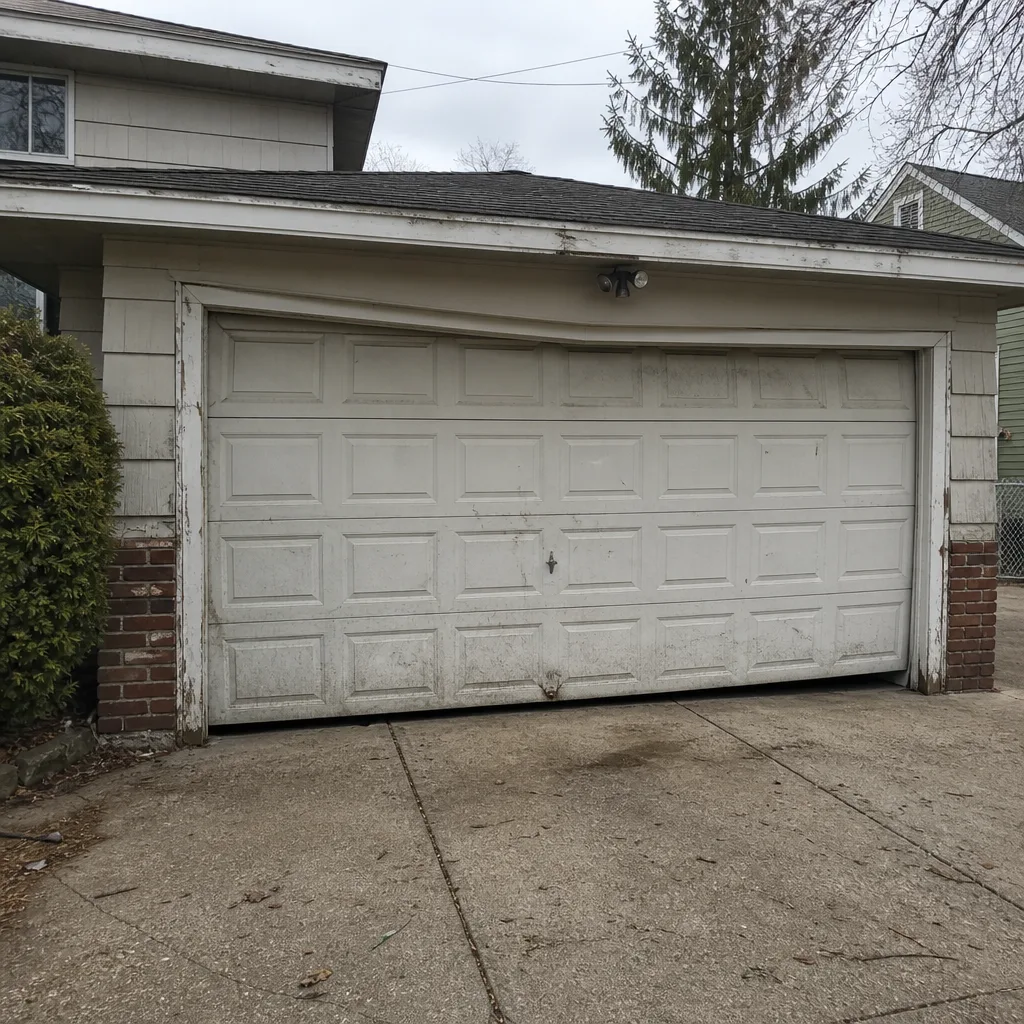 Before
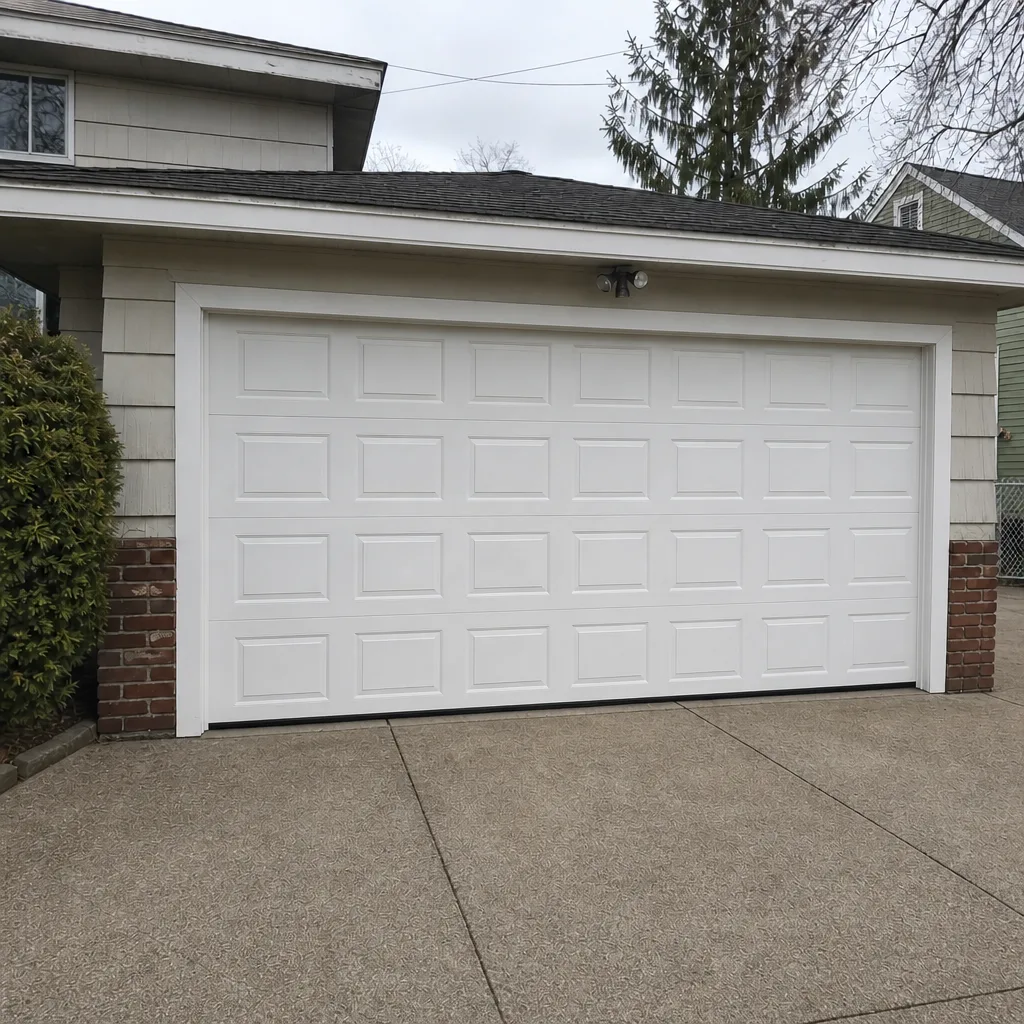 After
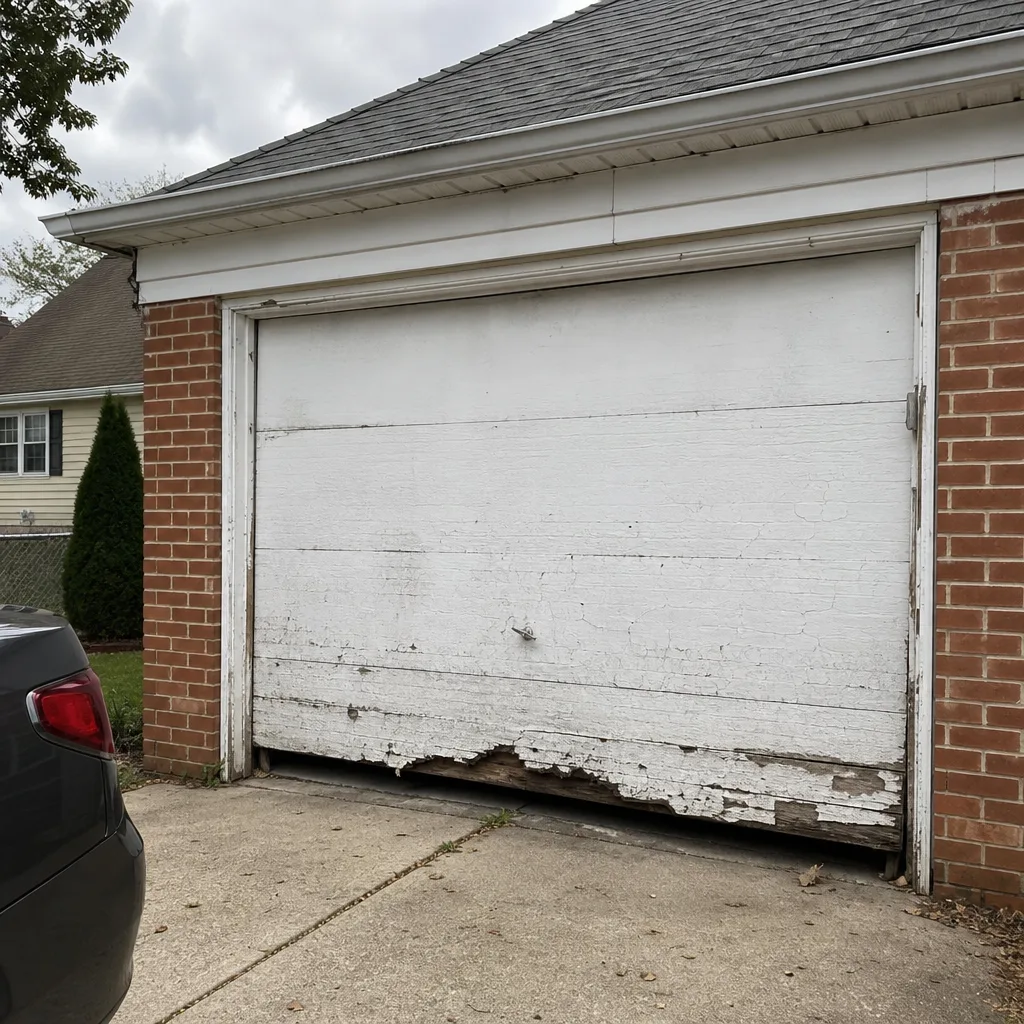 Before
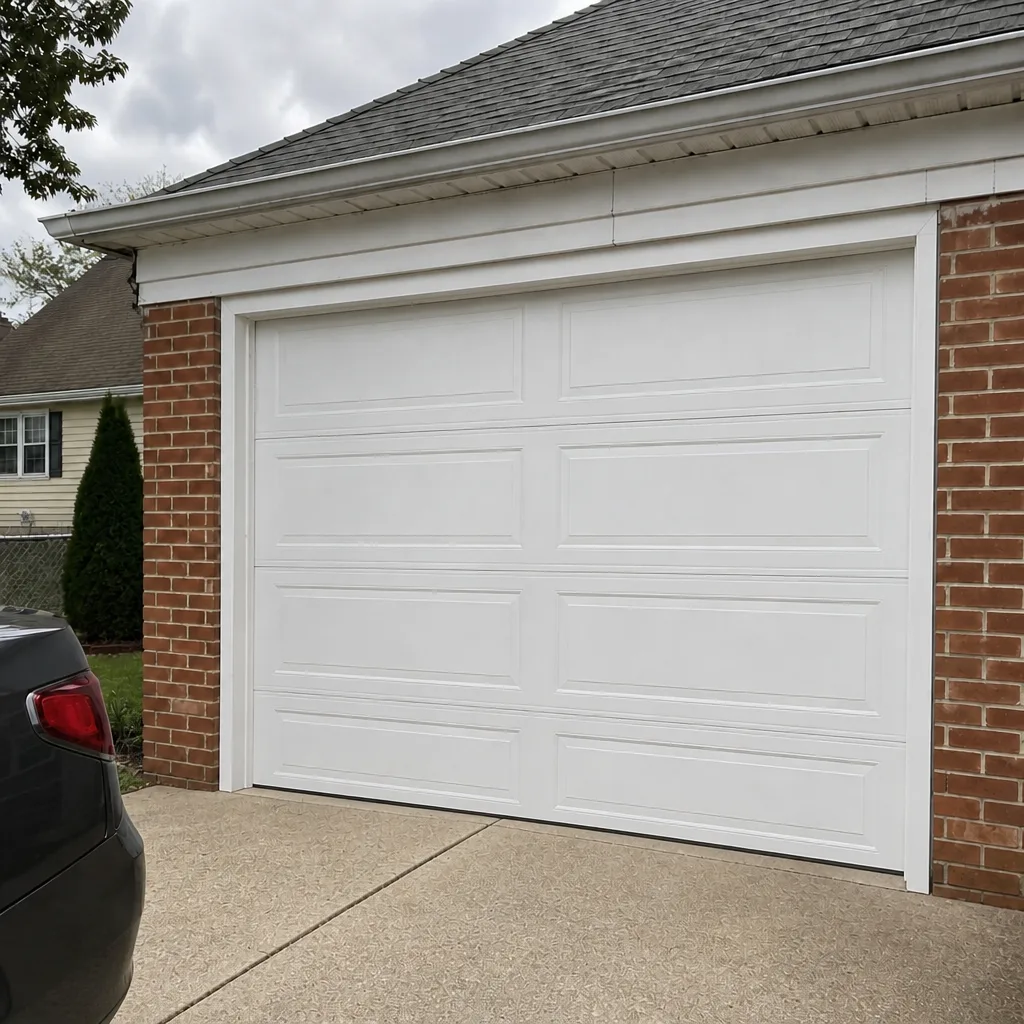 After
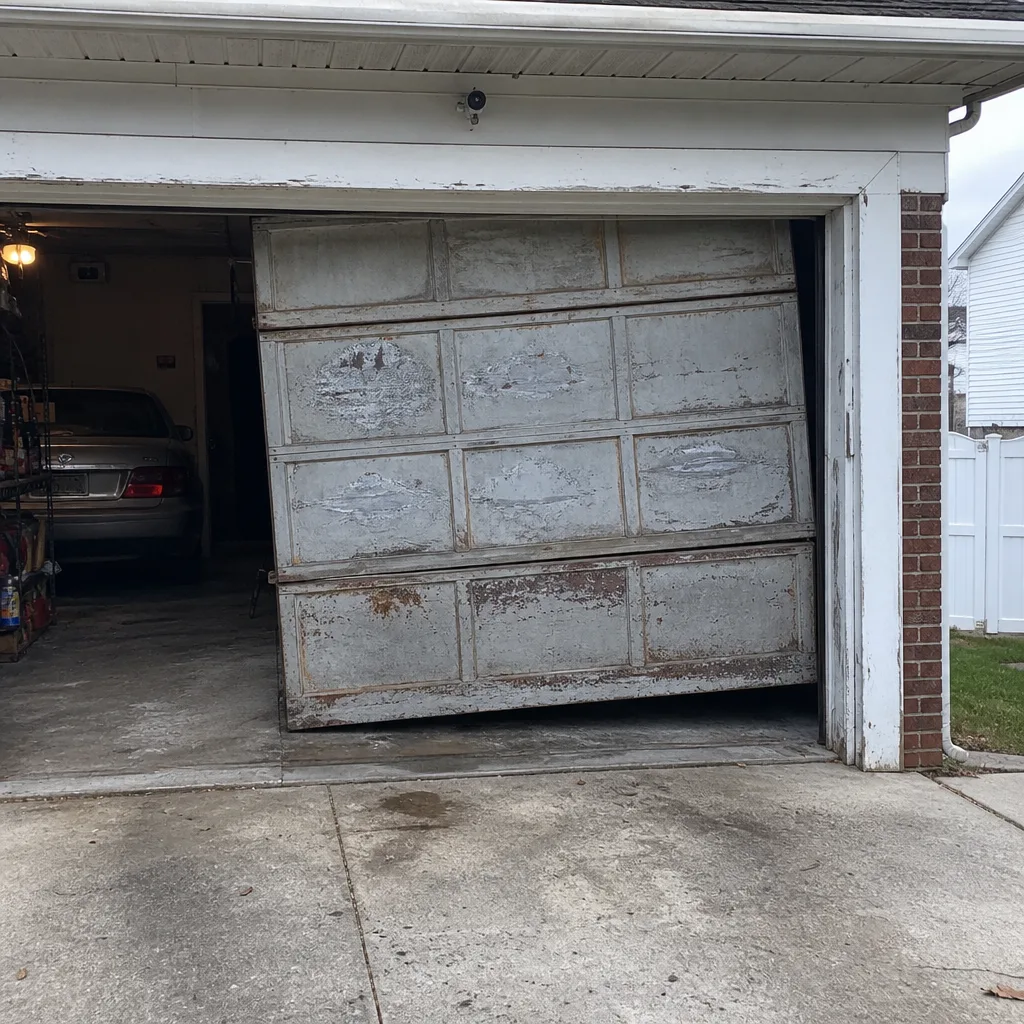 Before
 After
When to Call a Professional
Call when a spring has snapped, the door won’t operate, the door is crooked or has dropped on one side, or you see a cable hanging loose or frayed. Call when a torsion spring has broken and the door feels heavy – stop lifting it by hand and let a technician take the weight. Call when the opener runs but the door doesn’t move, or when the door cycles a few inches and stalls. Call when a smart opener has stopped pairing and the wall console still works, but the app doesn’t. Elmhurst Garage Door Repair Pros offers free estimates in Elmhurst – call (877) 554-9033. We answer 24/7. Fast dispatch from 7am to 7pm, Sunday through Friday. The written estimate sets the price before any work starts.
Frequently Asked Questions
Typical printed estimates for a single torsion spring replacement in Elmhurst usually fall in the low-to-mid hundreds of dollars range, with extension spring replacement typically a little lower. A matched pair replaced together costs roughly twice a single spring, so the quote itemizes one spring or a pair. The written estimate you receive sets the final price before any work starts. Call (877) 554-9033 for an exact quote – estimates are free.
For most repair calls, yes – same-day service is standard for spring, cable, rolling, and opener failures in Elmhurst. Call (877) 554-9033. We answer 24/7. Fast dispatch from 7am to 7pm, Sunday through Friday, and we’re closed Saturday. New door installations are different: that work is measured, ordered, and scheduled, so same-day isn’t how an install is booked. The written estimate locks in the price before anything is ordered.
No – the written estimate you receive before any work starts is the price, and the labor and parts are itemized in it. If the diagnosis changes what’s needed after we arrive, the estimate is updated first and you agree before anything is done. That’s true whether we’re replacing one torsion spring, a pair of springs, or a whole opener. Call (877) 554-9033 for a free estimate.
The local professionals we connect you with are licensed and insured as their state requires. Our technicians have up to 13 years of experience, and spring work is handled with the proper tools and safety protocols because a torsion spring failure is genuinely dangerous. Call (877) 554-9033 with the model and symptom, and we can usually tell you what to expect before we arrive.
Clopay, Amarr, and Wayne Dalton all make door series that fit the most common single-car openings in Elmhurst – nominal 8×7 and 9×7 – when the rough opening and headroom match the spec. Craftsman openers are also common on these homes and can stay in place during a door swap if the drive system is sound. The deciding measurement is the actual opening and the track clearance, not the size label. Call (877) 554-9033 to schedule a measure.
Sometimes. A modern LiftMaster or Chamberlain unit needs a properly located outlet, and in older Elmhurst garages the existing outlet may be unsuitable or miswired. If the wiring needs work, an electrician handles that before our technician installs the opener. We can diagnose the mechanical side of the opener on the first visit and flag the wiring question at the same time. Call (877) 554-9033 if you’d like to check before upgrading.
The Bottom Line
Garage doors in Elmhurst are shaped by the neighborhood’s housing stock: tight openings, shared walls, low headroom, and hardware that’s seen a lot of Queens weather. The right decisions come from three facts – door age, opener type, and spring condition – plus honest measurements before anything is ordered. Springs are the most common failure and the most dangerous repair, so they belong with a trained technician. Repairs are often the right call; replacements and full overhauls come down to the math once all three factors are known. For repair, opener work, or a fresh install, call (877) 554-9033 for a free estimate.
Written by the team at Elmhurst Garage Door Repair Pros.