
Last updated November 21, 2026
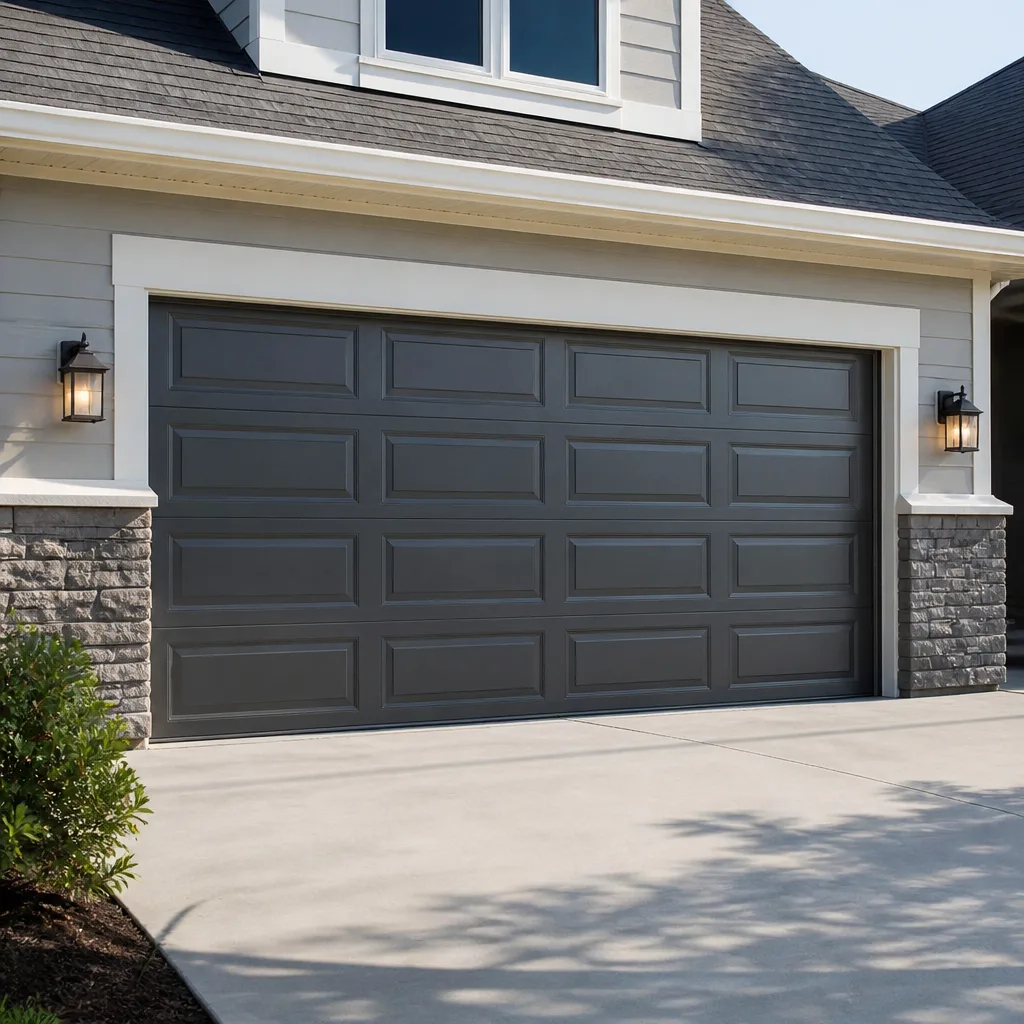 Raised-panel steel
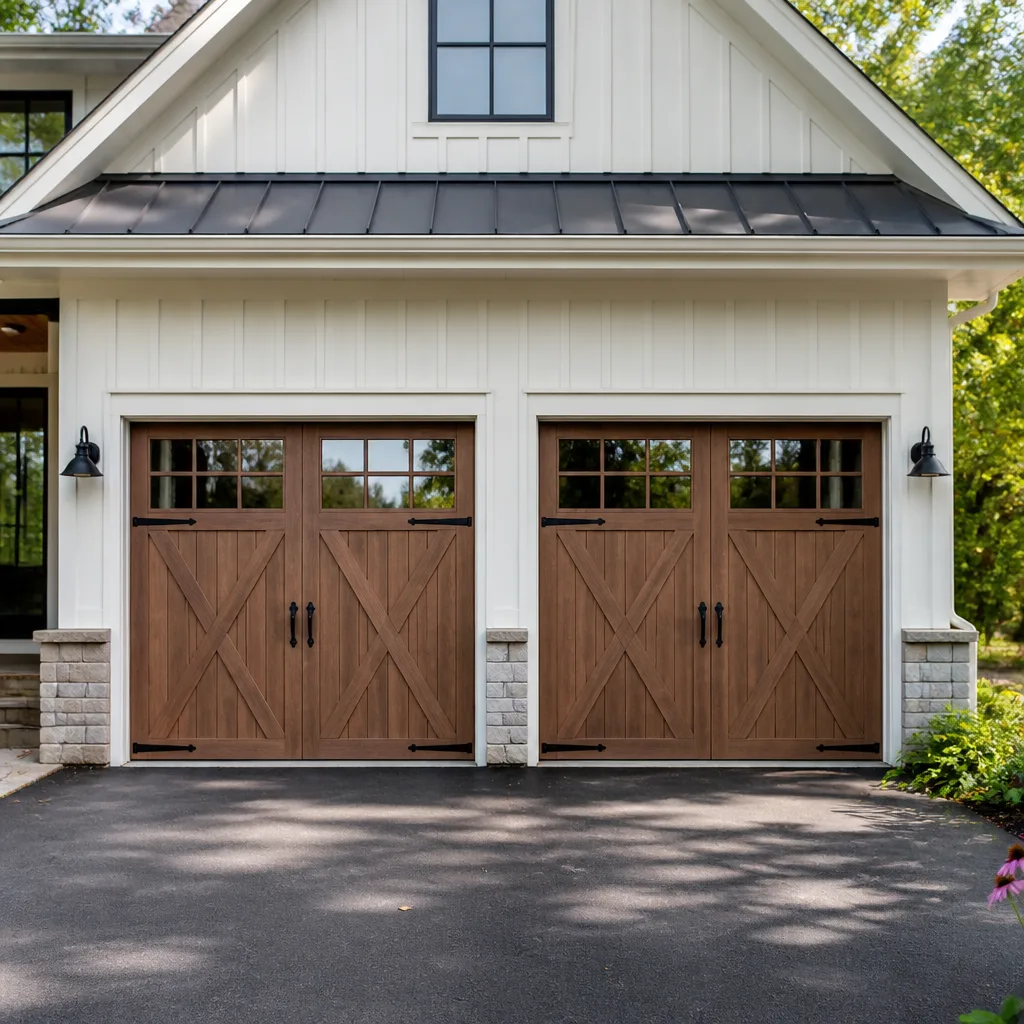 Carriage house
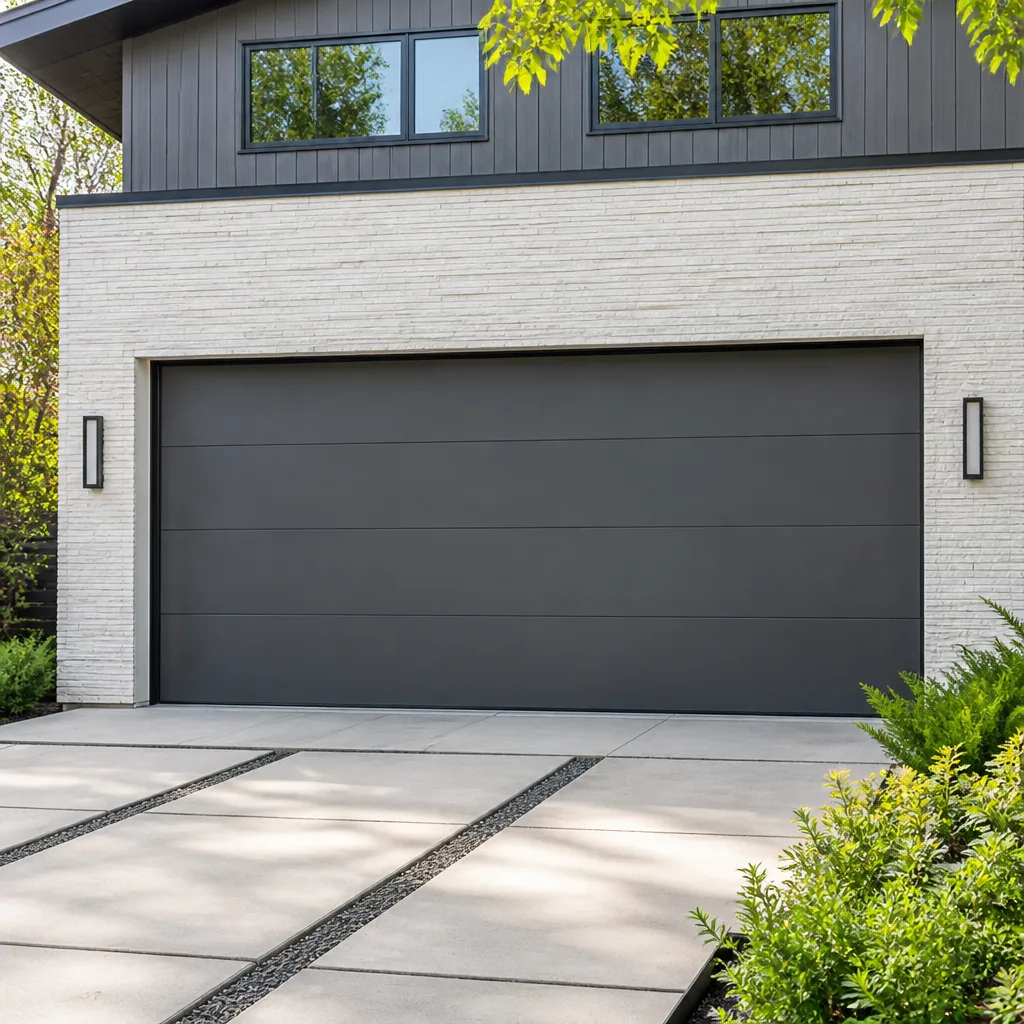 Modern flush
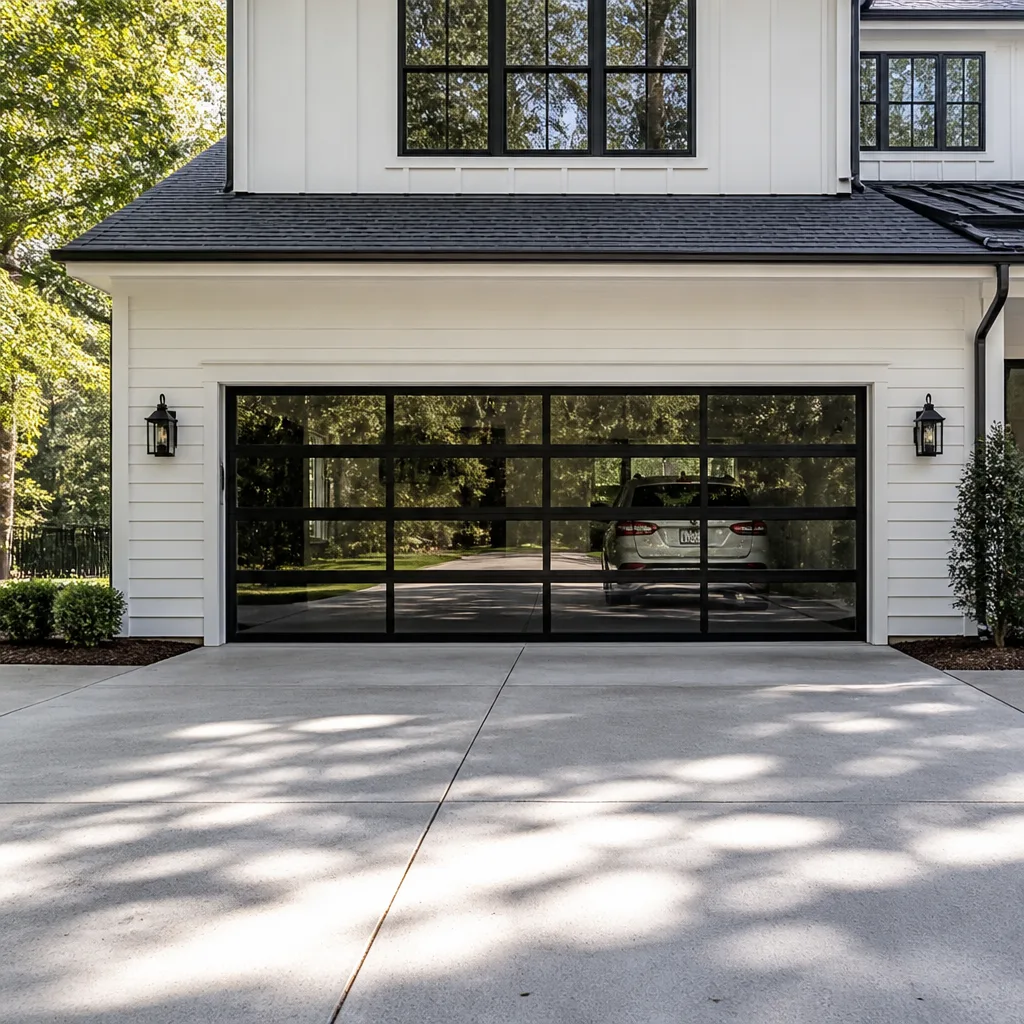 Full-view glass
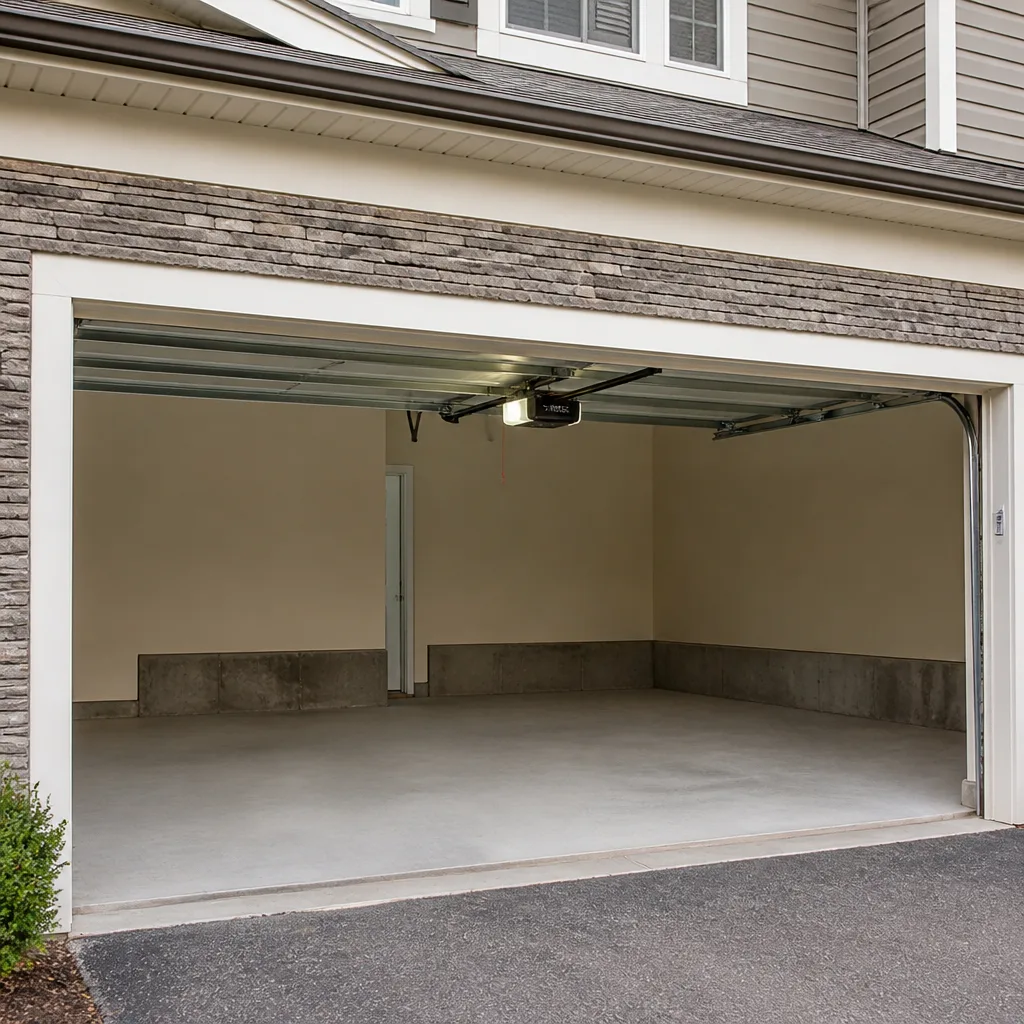 LiftMaster openers
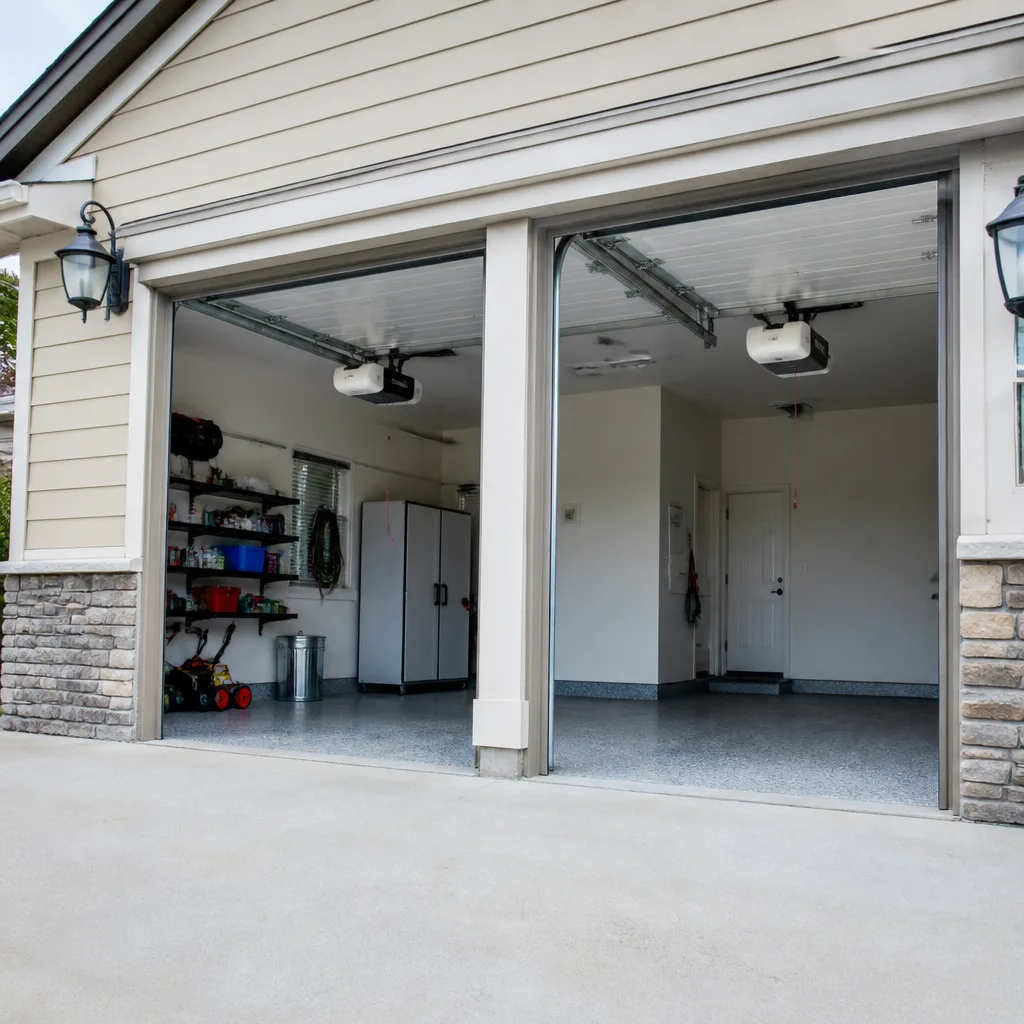 Chamberlain openers
Full 25-point door and opener safety check with every visit - springs, cables, rollers, tracks, and your LiftMaster or Chamberlain opener included
You get a price before we start. It does not change when the pro arrives.
Get your free estimateGarage Door Warning Signs: An Elmhurst Homeowner’s Reference Guide
A garage door rarely fails without notice. It tells you first – in a grind, a hesitation, a crooked tilt, a motor that suddenly sounds like it’s working harder than it used to. Most homeowners miss those signals because they’re small and easy to dismiss as a “bad day.” That’s a costly habit. A torsion spring that’s slowly losing tension pushes the whole load onto the opener motor, and a LiftMaster motor that’s quietly straining can burn out within weeks. This guide walks through the sounds, movements, and visual cues that predict a failure before it strands you. We’ll show you exactly what to watch for in an Elmhurst garage.
Quick Answer
The most reliable garage door warning signs are a door that moves at mismatched speeds, a grinding or popping sound during travel, a door that opens crookedly, rollers that skip or wobble, and an opener motor that runs while the door stays put. A visual check of the torsion spring, cables, and rollers takes about 60 seconds and catches most of these early. If you spot any of them, get the door inspected before it fails completely – especially in Elmhurst, where cold winters put extra stress on springs and tracks.
Styles & brands we work with
- Raised-panel steel
- Carriage house
- Modern flush
- Full-view glass
- LiftMaster openers
- Chamberlain openers
Table of Contents
- Diagnosing by Sound: What Each Noise Tells You
- Diagnosing by Movement: Speed, Crooked Travel, and Mystery Reversals
- The 60-Second Visual Inspection
- Opener-Specific Warning Signs by Brand
- This Week vs. Tonight: Reading the Repair Timeline
- What to Do If the Door Is Stuck Closed or Stuck Open
- Elmhurst Factors That Accelerate Wear
Diagnosing by Sound: What Each Noise Tells You
Your ears are the fastest diagnostic tool you own. A garage door in good shape makes a low, steady hum with a soft roll at the tracks. Anything sharp, repetitive, or metallic is the door asking for help. In our experience, three sounds account for most of the “something’s wrong” calls we get across Elmhurst – and each points to a different repair.
Grinding. A grinding or scraping noise that runs the length of the door’s travel usually points to a worn roller bearing. Standard nylon rollers ride quietly when they’re healthy; once the bearing wears down or the roller flattens, it drags against the track. Grinding that’s worse near the bottom of the door often means the bottom rollers have taken the most wear. Swapping worn rollers for fresh nylon ones typically resolves this, though it’s worth checking that the tracks themselves haven’t been bent out of alignment.
Popping or a single loud clunk. A single pop when the door starts moving often comes from a cable drum that has slipped on its shaft – usually a loose set screw. You may hear it once per cycle. Left alone, a slipped drum can eventually let a cable jump its groove, which is a dangerous condition. Don’t try to retighten the drum yourself; cables carry significant tension and can cause serious injury.
Rhythmic clunk or thump. If the noise repeats in a steady rhythm as the door moves, that’s usually a bent track section causing a roller to skip the rail and snap back. The rhythm matches the door’s travel speed, not the motor. Small bends can sometimes be corrected; severe ones mean a track replacement.
- Grinding: Worn roller bearing – replace the nylon roller.
- Single pop or clunk at start: Slipped cable drum – loose set screw.
- Rhythmic clunk during travel: Bent track causing roller skip.
- High-pitched squeal: Dry or worn hinges and rollers – lubrication may help short term, but worn parts need replacing.
- Rattling that worsens over time: Loose hardware or a track pulling away from its brackets.
If you can’t pinpoint the sound, describe it when you call. That detail alone often saves a diagnostic step. Our garage door repair work starts with identifying the exact source of the noise before anything gets touched.
Diagnosing by Movement: Speed, Crooked Travel, and Mystery Reversals
Watch the door through a full cycle – up and down – and you’ll learn a lot. A healthy door moves at roughly the same speed both ways, stays level across its width, and stops cleanly at each end. When any of that changes, it’s a signal.
Slow up, fast down. This is one of the most commonly ignored signals. It usually means a torsion spring has lost tension. The spring is supposed to carry most of the door’s weight; when it weakens, the opener motor has to do the lifting. That overload is what kills motors early. A LiftMaster or Chamberlain motor forced to carry a door it wasn’t designed to lift may run for a few weeks and then fail – often without warning.
Door opens crooked. If one side rises before the other, the cause is almost always a broken or stretched cable on one side, not a track problem. The door hangs unevenly because the two sides are no longer lifting equal weight. This is a repair that should be handled the same day – a door traveling crooked puts stress on the opposite side’s cable and the opener.
Door stops at the same point every cycle. That points to a physical obstruction in the track, a misaligned roller, or a limit switch on the opener set incorrectly. A limit switch tells the motor where the door is supposed to stop – if it’s mis-set, the door halts at the same spot every time. You can usually confirm whether the issue is track-based by watching the door and listening; if the motor stays silent when the door stops, the limit switch is likely the culprit.
Door reverses for no reason. There are three common causes, and they’re not the same fix:
- Auto-reverse sensor misalignment. The safety sensors near the floor on each side of the door need a clear line of sight. If one is bumped or dirty, the door reverses as if it detected an object.
- Genuine obstruction. Debris, a shop tool, or a hockey stick resting in the door’s path.
- Force limit issue. The opener’s force setting is too sensitive or too tight, and it reads resistance that isn’t there.
Start by checking sensors and the door path. If the door still reverses with nothing in the way, the force settings need adjusting – that’s a job for a technician familiar with your opener’s control panel.
The 60-Second Visual Inspection
You don’t need to crawl under the door or touch moving parts to catch most failures early. A minute with good light is enough to spot the highest-risk warning signs. Do this monthly, and again after any storm that brings heavy ice or wind through Elmhurst.
Step 1: Check the torsion spring. The spring is the horizontal coil above the door, mounted on the shaft. On a healthy spring, the coil is unbroken. A crack of even a fraction of an inch along the coil signals failure. Run your eyes the length of it – a visible gap means the spring has broken or is about to. Do not touch it. Torsion springs hold extreme tension and can cause serious injury; only a trained technician with the right tools should handle them.
Step 2: Look at the cables at the bottom brackets. The cables run from the bottom corners of the door up to the drums above. Fraying, kinked, or rusted cable is a warning. A single broken strand in a cable is enough to fail the whole system. The bottom bracket area is where failures usually begin – if you see jagged wire or rust discoloration, stop using the door and call.
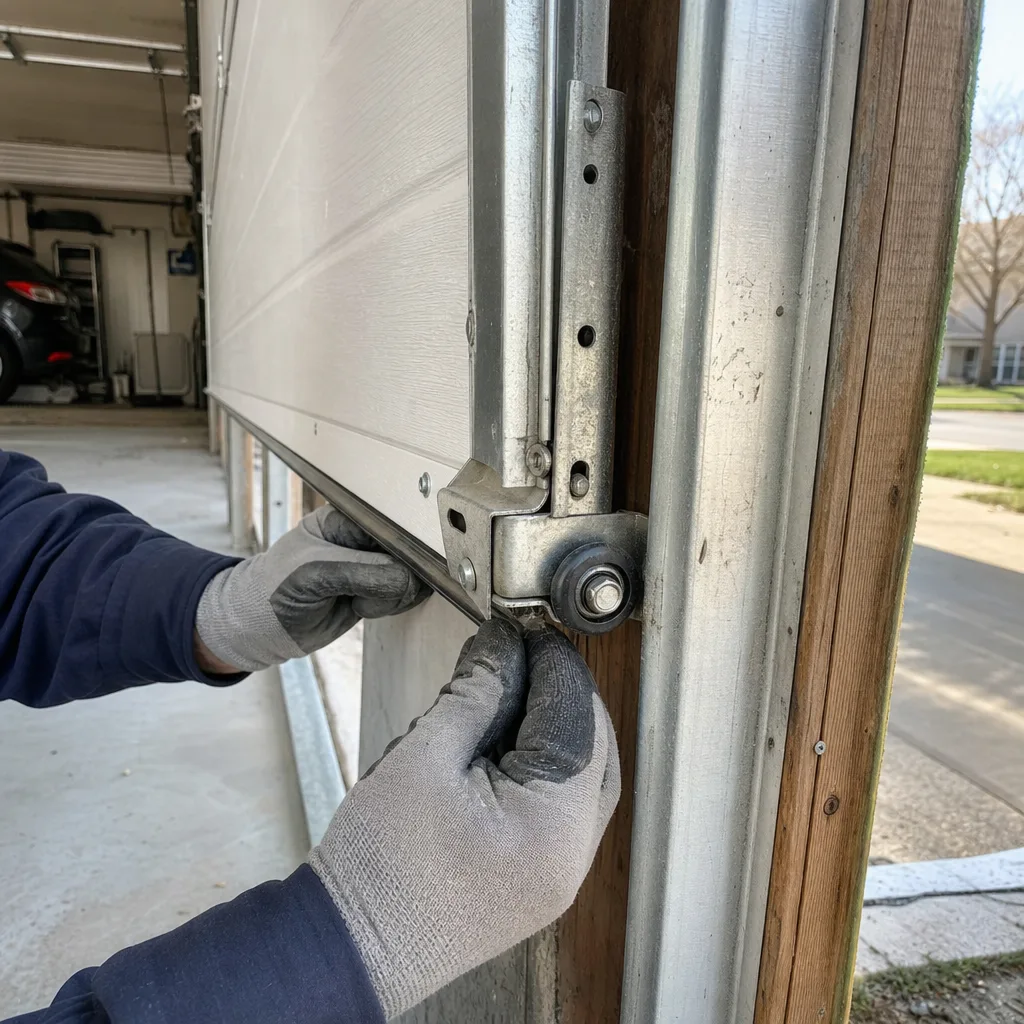
Step 3: Look at the rollers. Every roller has two parts: the nylon wheel and the steel stem. A roller still rolls smoothly and stays round is healthy. A roller that’s flat on one side, cracked, or wobbles in the track is past its life. Nylon rollers are quiet and standard on most residential doors. Steel rollers last longer but run louder – when they wear, they grind and can wear the track. Most homeowners in Elmhurst’s residential neighborhoods are running nylon, and the general rule is to replace a full set at once once any one of them shows flat spots.
Step 4: Check the tracks visually. Run a hand lightly along the inside curve of the track – with the door closed – and look for dents, misaligned sections, or brackets that have pulled away from the wall. Any visible bend deserves a professional look.
If your check uncovers anything on this list, a garage door opener repair or spring repair is likely in the cards. Best to find out before a busy morning.
Opener-Specific Warning Signs by Brand
The door is only half the system – the opener has its own signals, and they’re often easier to miss because the manufacturer may not have explained them clearly. Here’s what to look for in the two brands we see most often in Elmhurst homes: LiftMaster and Chamberlain. Both share many components, so the patterns carry over.
LiftMaster error codes
LiftMaster openers use the diagnostic LED on the logic board to flash a code. Each pattern is a count. Here’s how to read them:
- 1 flash: Safety sensor issue – usually a misalignment or wiring fault. Check for obstruction and sensor alignment first.
- 2 flashes: Safety sensor obstruction – something in the door’s path or the sensor lens is blocked or dirty.
- 3 flashes: Safety reversing sensor malfunction or wiring short – the sensor isn’t reporting.
- 4 flashes: Safety sensor wire miswired or sensor obstructed – double-check wiring at both sensors.
- 5 flashes: Opener motor thermal overload – the motor has overheated. Let it cool, then investigate the cause (often a door that’s too heavy for the opener).
- 6 flashes: Faulty logic board or motor control.
- 7 flashes: Manual release or wall control issue.
- 8 flashes: Faulty logic board.
- 9 flashes: Faulty logic board or motor.
- 10 flashes: Check the door’s balance or the obstruction sensors at the door.
Knowing the flash count before you call saves time. Even if you don’t memorize every code, “it’s flashing 5 times” is the kind of specific detail that lets a technician arrive with the right part.
Chamberlain motor runs but door doesn’t move
If you hear the motor running – the familiar hum – but the door stays put, the trolley carriage’s gear has likely stripped. The carriage rides along the rail and is pulled by the opener belt or chain; when its internal gear wears smooth, the motor spins but nothing transmits. This is common on older Chamberlain units that have done thousands of cycles. A replacement carriage is a straightforward fix for a technician; for a homeowner, the tension and alignment make it a job best handled by a pro. If you’re not sure whether it’s the carriage or the motor itself, a quick check is to look for the carriage moving without the door – if the carriage is still while the motor hums, the gear is the problem.
The same pattern turns up in LiftMaster openers with smart features like myQ – if the app reports the opener “running” but the door isn’t moving, suspect a stripped carriage before the logic board. Our technicians work on both brands regularly, so a straight diagnosis is built into how we respond.
This Week vs. Tonight: Reading the Repair Timeline
Not every warning sign is a 2 a.m. emergency. Sorting your signals into “this week” and “tonight” saves money and stress. Here’s how we sort them.
Tonight (call now or use the door sparingly):
- Broken torsion or extension spring – the door may still open if the opener forces it, but never let it run unattended.
- Door hanging crooked – one cable is broken, and every cycle stresses the other side.
- Door stuck open and won’t close – a security and weather-exposure problem that needs immediate attention.
- Door reversing mid-travel with nothing in the path – the door may be reading an obstruction that isn’t there or a force limit that’s failing.
This week (book a repair before it turns into an emergency):
- Grinding or rhythmic squealing – a worn roller or a bent track, but the door still moves.
- Opener motor runs but door barely moves – the trolley carriage or drive belt is tired, not dead.
- Roller replacement or track alignment – the door works, but wear is accelerating.
- Any visual crack or fraying you noticed on a roll but haven’t acted on – the failure is coming.
For emergency situations, our answer is simple: We answer 24/7. Fast dispatch from 7am to 7pm, Sunday through Friday. For same-day repair, call early in the day. For scheduled repairs, we can usually book the next open slot without delay. Check the Elmhurst Garage Door Repair Pros service line if you’re not sure whether your issue qualifies as urgent – a quick call sorts it out.
What to Do If the Door Is Stuck Closed or Stuck Open
If the door is stuck closed and you need to get a vehicle out, first check the opener’s manual release. If pulling it isn’t possible or the door won’t move once it’s released, stop – a door that won’t release is likely a broken spring or a badly hung cable and forcing it could drop the door or snap a cable.
- Disengage the opener with the manual release (the red cord on most openers). Never pull it while the door is fully raised – it can drop.
- Once released, try to lift the door by hand from the bottom edge, with a helper. If it’s too heavy, don’t force it. A door that won’t lift post-release almost always has a broken spring.
- Get the vehicle out if possible while the door is raised, then set it back down gently – never leave a released door open unattended.
- Call for repair. Don’t operate the door with the opener while it’s in this state.
If the door is stuck open and won’t close, first check the safety sensors. They may be misaligned, dirty, or the door may have a broken cable on one side that’s tripping a safety limit. Don’t force the door down by hand – a door with a broken cable can swing violently once it’s pushed past its balance point. If you can’t get it to close and you’re worried about security, an emergency repair call is the safe move.
One thing we always say: never trust the door to support a person. A stuck door is a work-stoppage, not a climbing exercise. In Elmhurst, a door left open in the cold season risks frozen tracks and water infiltration that make the eventual repair worse.
Elmhurst Factors That Accelerate Wear
Every climate puts its own stress on a garage door, and Elmhurst is no exception. Winters here bring hard freezes and thaws that cycle the metal parts of a door through expansion and contraction. Springs fatigue faster under constant temperature swings. Cables pick up condensation and, left unchecked, can start to rust or fray. On particularly cold mornings, the door’s metal contracts and rollers can bind briefly in their tracks – if the binding persists past the first minute of travel, that’s a warning sign to check the rollers and tracks.
Summer brings another set of conditions. Heat can warp wood or soften the seals on the door, and humidity accelerates wear on the opener’s belt or chain drive. In the older residential blocks of Elmhurst, where homes were built across several decades, we see a range of door ages – some original, some replaced – and old doors that have been painted repeatedly can have heavier panels that put extra load on the opener. That’s one more reason to watch for the slow-up, fast-down pattern: the door has to lift more weight today than it was originally set up for.
When a new system is on the horizon, garage door installation can account for these local conditions from the start – a properly tensioned spring, a modern opener, and rollers rated for regular temperature swings all change the repair math over the years.
Common Mistakes to Avoid
- Ignoring the speed change. A door that’s slower on the way up than down is carrying load it wasn’t designed for. Waiting for it to “get better” usually leads to an opener motor failure instead.
- Forcing a crooked door up or down. A door tilted to one side has a broken cable. Running it stresses the other cable and the opener, and a cable failure can cause serious injury. Stop and call.
- Using WD-40 on the tracks. Lubricating the tracks attracts dirt, which turns into grinding. Lubricate the hinges and rollers lightly with a proper garage-door lubricant; leave the tracks alone.
- Adjusting the force limits yourself to “fix” a reversing door. The force setting is a safety feature, not a tuning knob. Raising it beyond the door’s weight is how a door can close on a person or a pet. This is a job for a technician.
- Not checking the spring before winter. A spring on its last cycle may survive fall but give out on the coldest morning. A pre-winter visual check takes one minute and can prevent a stranded car.
- Assuming a loud opener means a failing opener. In many cases, the noise is the door, not the motor – worn rollers, a dry hinge, or a bent track are all cheaper fixes than a replacement opener.
- Calling for a new door when a repair will do. If a door is structurally sound and only shows worn hardware, a panel or hardware fix is the right move. A full replacement makes sense when the door is warped, rusted beyond repair, or repeatedly failing.
See the difference
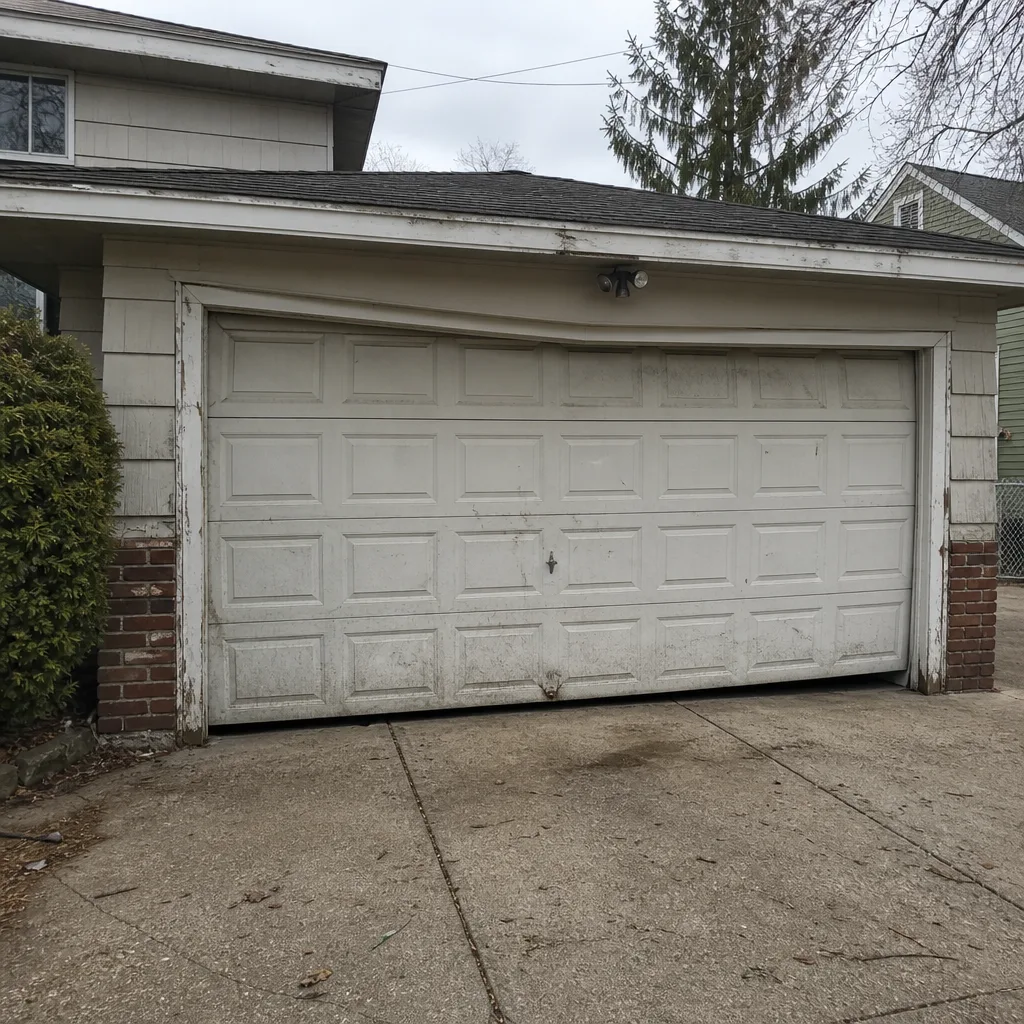 Before
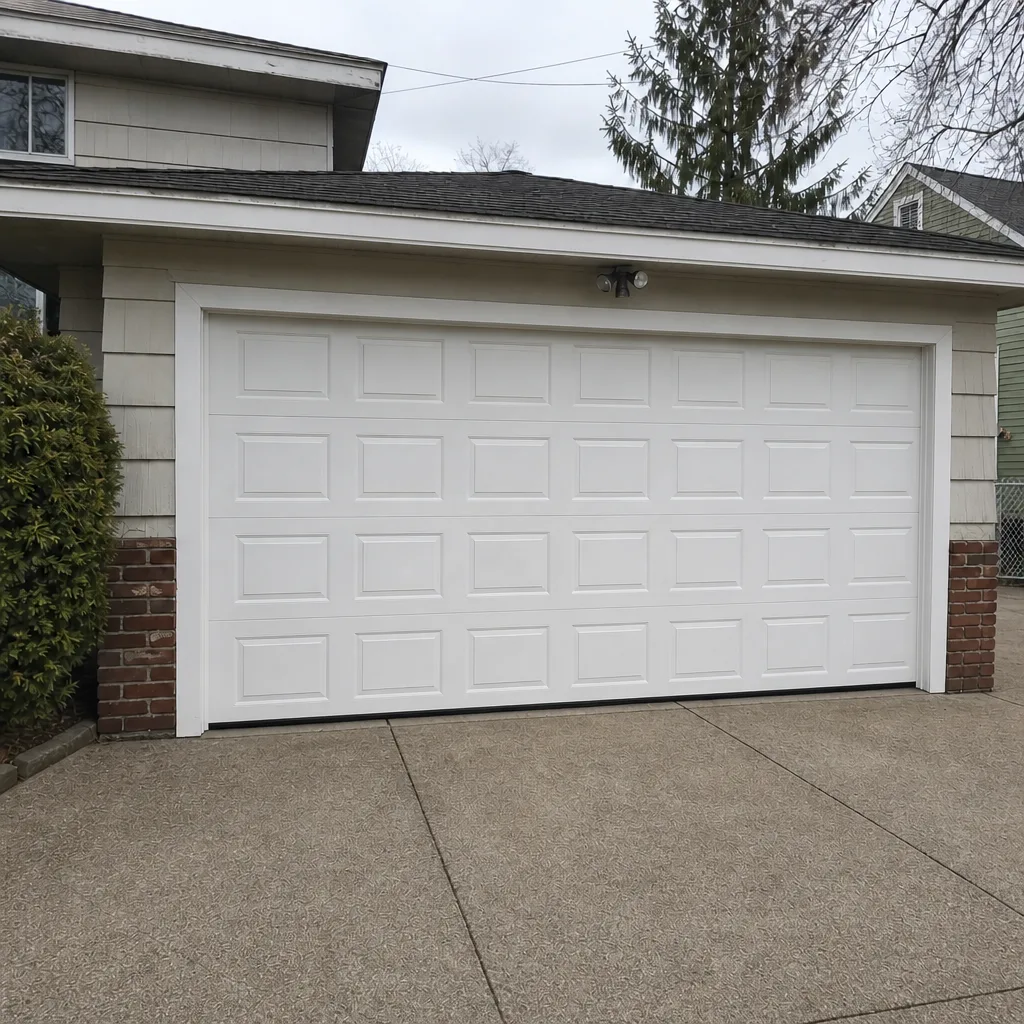 After
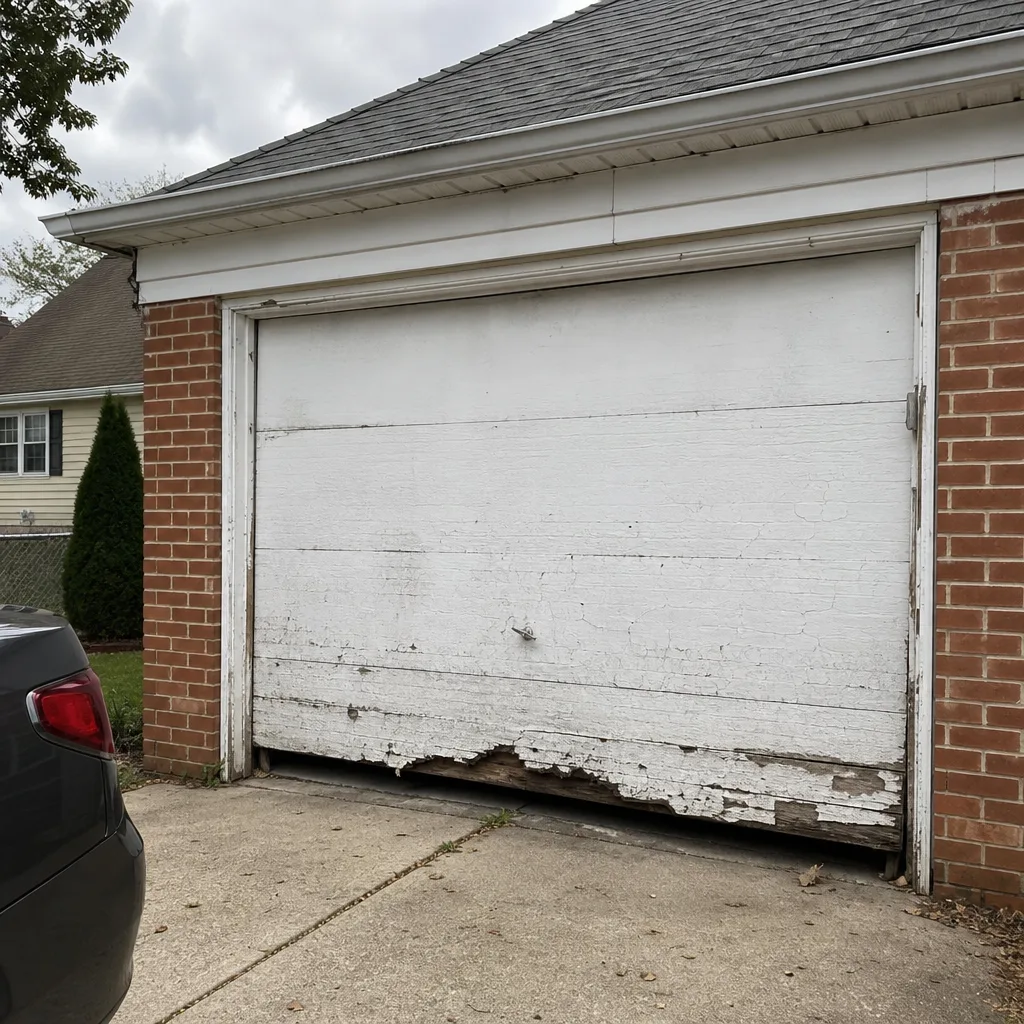 Before
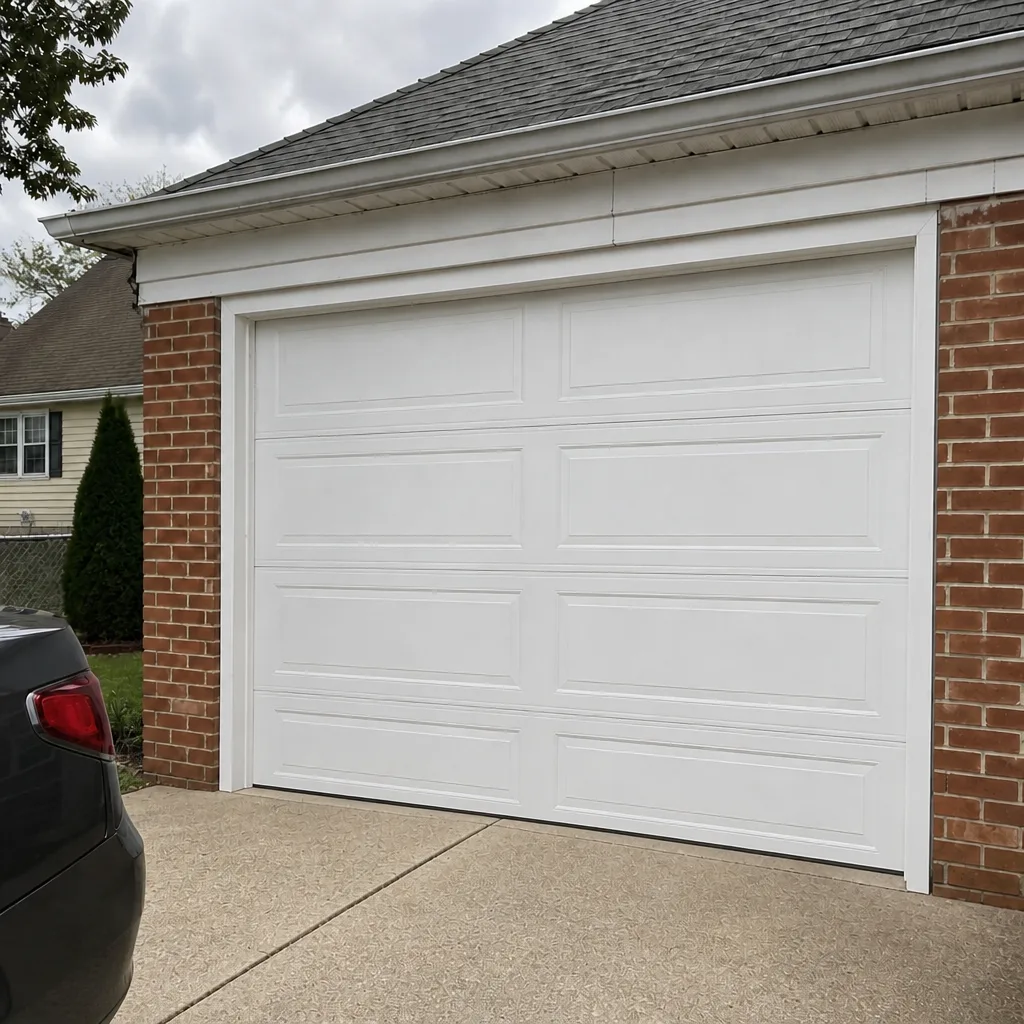 After
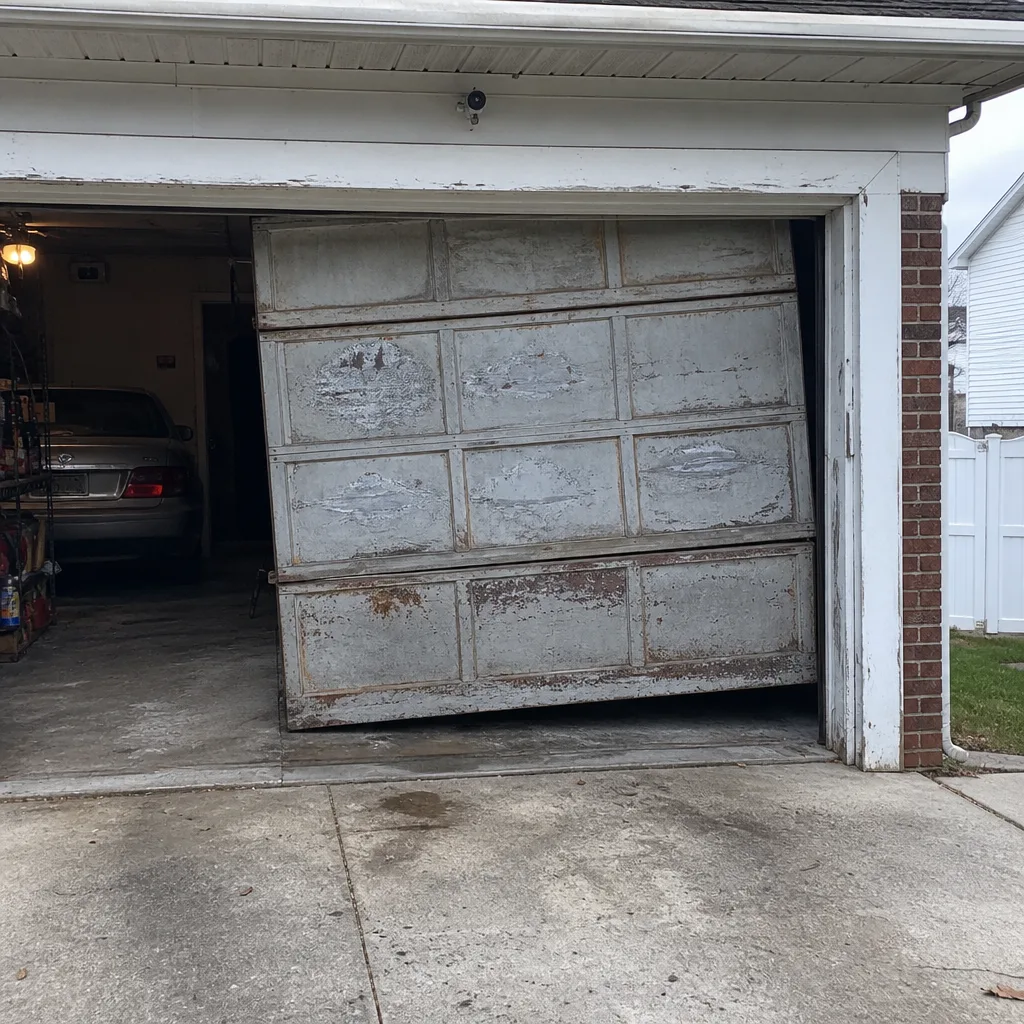 Before
 After
When to Call a Professional
Call for a professional if you spot any of these: a broken or cracked torsion or extension spring, a frayed cable, a door that opens crookedly, a door that reverses without obstruction, a motor that hums but doesn’t move the door, or a door that’s stuck closed or open. These aren’t jobs to tackle with a socket set and a ladder – high-tension springs and cables can cause serious injury, and the right safety tools make the difference between a fix and an accident. If you’re not sure whether your issue is urgent, a phone call to a technician can help you decide. Elmhurst Garage Door Repair Pros offers free estimates in Elmhurst – call (877) 554-9033. We answer 24/7. Fast dispatch from 7am to 7pm, Sunday through Friday. We work on the brands already on your home, including LiftMaster, Chamberlain, Clopay, and Genie, so there’s no guesswork about compatibility.
Frequently Asked Questions
A broken torsion spring shows as a visible gap or crack in the coil above the door, and the door will be very heavy to lift by hand. You may also hear a loud pop when it breaks. Look at the coil first – if you see a break, don’t operate the door; call for spring repair.
The most likely cause is a stripped trolley carriage, the gear-driven part that rides along the rail. The motor spins, but the worn gear doesn’t engage, so the door stays put. This is common on older Chamberlain and LiftMaster units and is usually a straightforward repair.
The number of flashes on the logic board’s LED signals a specific fault – 1 to 4 usually points to safety sensor or wiring issues, 5 indicates motor overheating, and higher counts (6, 8, 9) suggest logic board or motor problems. Count the flashes before you call; it speeds up the diagnosis.
Rollers themselves are a removable part, but the door should be fully supported and the springs completely released before any roller work, or the door can drop. For most homeowners, having a technician handle roller replacement is the safer choice. If you choose to do it yourself, never touch the springs and never work with the door raised and unsupported.
A quick visual and listen-through once a month is enough for most homes. Add a check after any heavy storm or a long cold snap in Elmhurst, and anytime you notice a change in speed, sound, or alignment. Catching a warning sign early turns a spring repair into a routine job instead of a stranded morning.
A crooked door almost always means a broken or stretched cable on one side. The two cables need to lift equal weight; when one gives, the door tilts toward the weak side. Don’t run the door in this state – the stress on the opposite cable and the opener can make the problem worse. Call for repair the same day.
We answer 24/7. A call outside dispatch hours is booked into the next opening, Sunday through Friday, 7am to 7pm. If a door fails late in the evening, calling ahead lets us schedule the repair for the first available dispatch slot. Call (877) 554-9033 for a free estimate and we’ll confirm timing.
The Bottom Line
Garage doors fail gradually, not instantly. The sound, the speed, the tilt, and the flash code all give you advance warning – and an Elmhurst homeowner who knows what to look for can turn a would-be emergency into a scheduled repair this week. Check your spring, cables, and rollers once a month, listen for the three sounds that matter, and act on anything that stops at the same point every cycle or reverses with nothing in the way. When you spot a warning sign, don’t wait for it to become a breakdown. Call us for a straight diagnosis and a free estimate.
Whether you’re facing a snapped spring, a smart opener that’s lost its signal, or a door that’s just started to grind, our technicians have up to 13 years of experience working on the brands already on your home. Call (877) 554-9033. We answer 24/7. Fast dispatch from 7am to 7pm, Sunday through Friday. A free estimate and a written price, agreed before any work starts.
Related Reading
Written by the team at Elmhurst Garage Door Repair Pros.